
What Is Headless Commerce? The Future of Flexible Online Stores
3rd September 2025 / in Ecommerce / by Ruturaj Kohok
Have you ever felt frustrated by the limitations of your e-commerce platform when trying to launch a new feature or design a storefront? You’re not alone. When customers say that the experience a company provides is as important as its products and services, businesses are discovering that their traditional commerce platforms can’t keep up with evolving demands.
The funding raised for headless technologies isn’t just venture capital following trends; it’s a response to a real business need for more flexible online stores.
So what is headless commerce?
In its simplest form, headless commerce is the separation of your e-commerce application’s front end (your storefront and user experience) from the back end (your data and business logic). When these two parts operate independently, you get something powerful: the freedom to build whatever experience you want, however you want to build it.
If your current architecture is holding you back from innovating or getting new experiences to market as fast as you’d like, you could definitely benefit from understanding how headless e-commerce architecture works.
Throughout this guide, we’ll explore the components that make headless e-commerce tick, the platforms that support it, and whether this architectural approach might be the solution your business needs to stay competitive.
Why is headless e-commerce gaining popularity in 2025?
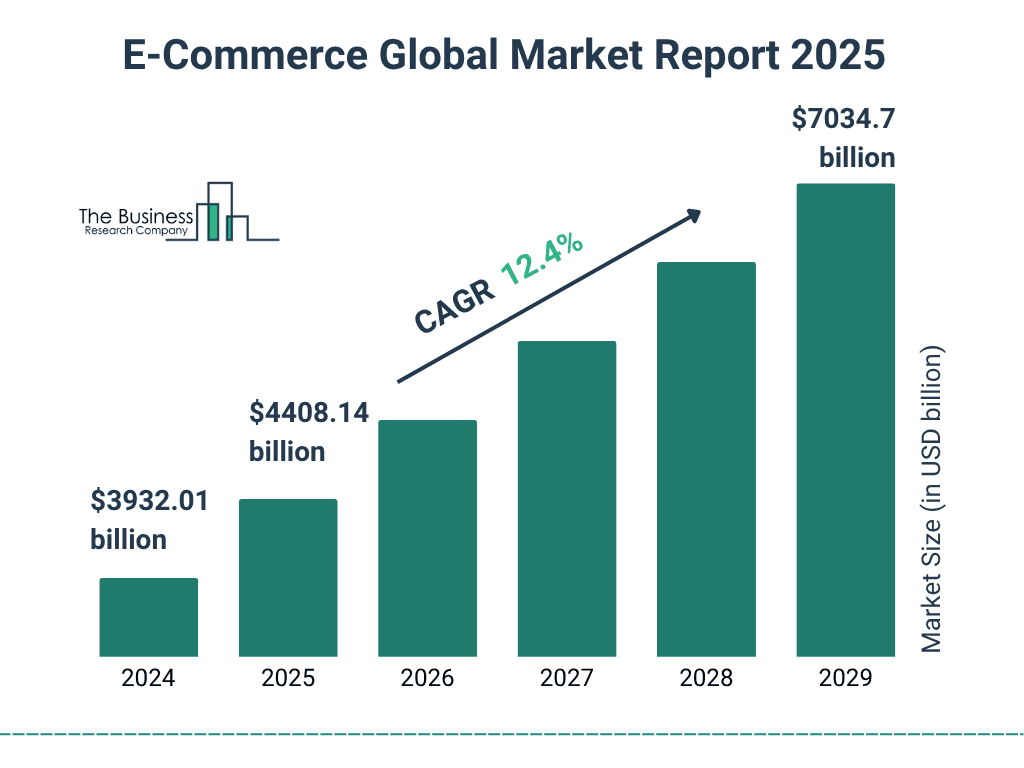
Source: The Business Research Company
The shift toward headless commerce isn’t just a technical trend; it’s a business necessity. The global headless e-commerce market reached $3,932.01 billion in 2024 and is projected to grow at a remarkable compound annual growth rate of 12.4%, potentially hitting $7034.7 billion by 2029. This growth reflects fundamental changes in how consumers shop and what they expect from digital experiences.
Changing consumer behaviour and expectations:
Customer loyalty isn’t what it used to be. During market disruptions, consumers across generations readily try new brands whenever suppliers fail to meet expectations. They want personalised interactions across all touchpoints, and traditional commerce platforms often struggle to deliver this level of customisation.
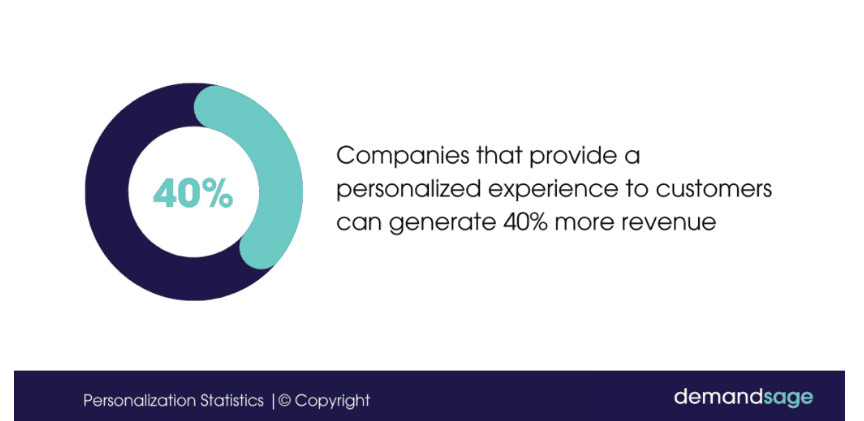
Source: Demand Sage
The data backs this up: Companies that excel at personalisation generate 40% more revenue than average players. This isn’t just about showing relevant products; it’s about creating experiences that feel tailored to individual needs and preferences across every channel where customers interact with your brand.
The reality is that consumer expectations have fundamentally shifted. They expect the same level of personalisation they get from Netflix or Spotify, but applied to their shopping experience. Traditional commerce platforms, with their rigid templates and limited customisation options, simply can’t keep pace with these demands.
Rise of omnichannel and mobile-first shopping:
Mobile commerce has exploded, with a significant increase in orders over the past two years. This helps with personalisation, better customer retention, and improved loyalty. M-commerce can also significantly improve your conversion rates, lower bounce rate, and future-proof your website against the ever-evolving market.
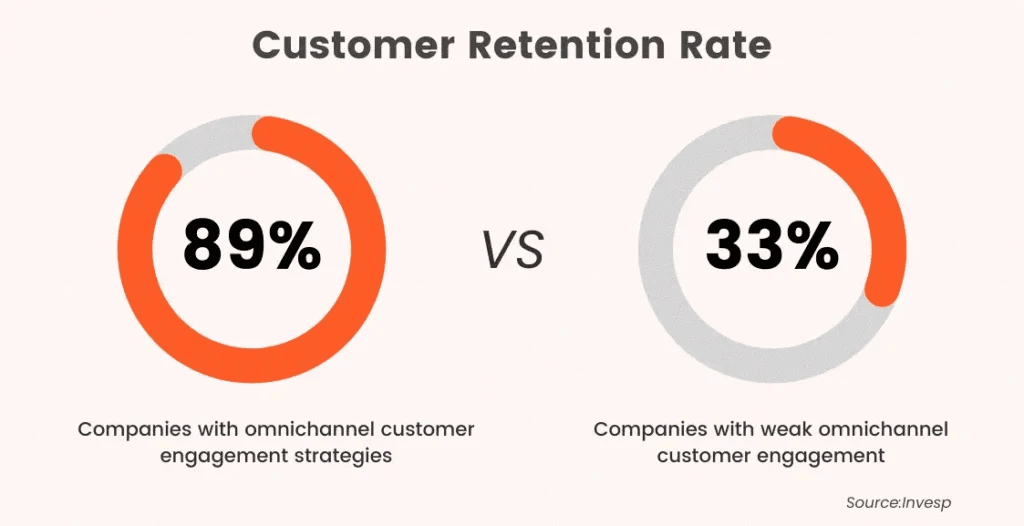
Source: True Loyal
Another reason for the rise in popularity of headless e-commerce is omnichannel marketing: organisations with strong omnichannel strategies retain an impressive 89% of their customers, compared to just 33% for companies with weak omnichannel approaches. That’s not a small difference: it’s the difference between thriving and barely surviving.
Recognising this shift, many leading retailers either have implemented an omnichannel strategy or plan to invest in one. The message is clear: businesses need technology that can support seamless experiences across web, mobile, social media, voice assistants, and even in-store kiosks.
Need for speed and flexibility in e-commerce
Source: Hosting Manual
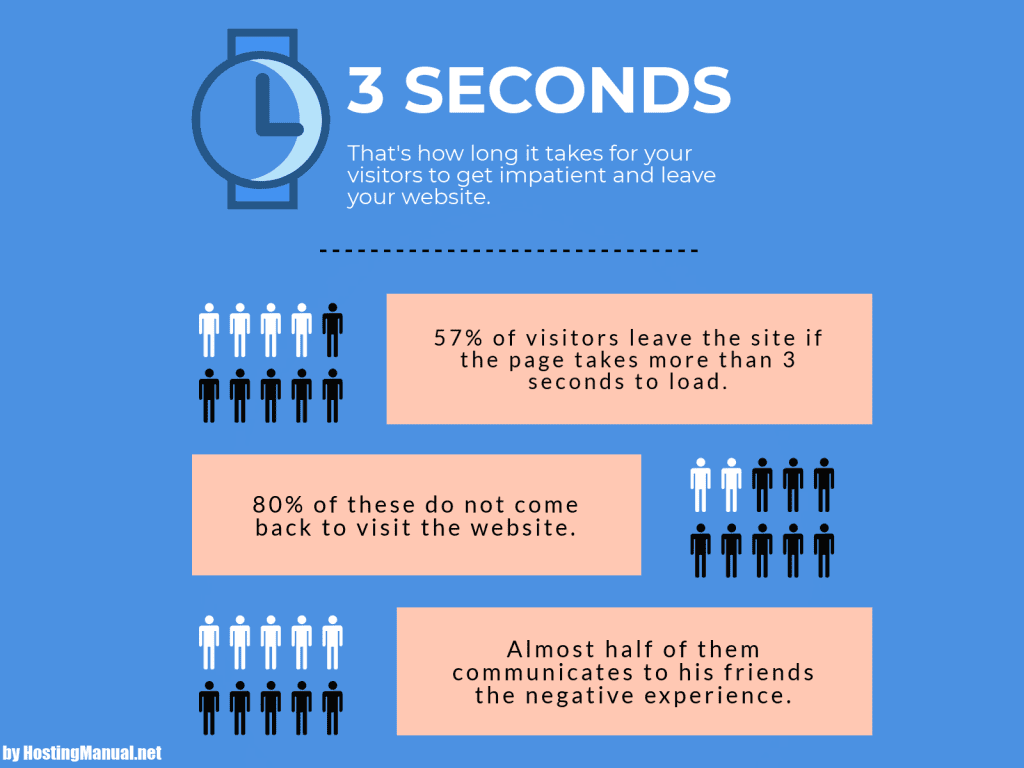
Speed and performance aren’t just nice to have; they’re essential. Headless commerce can dramatically optimise page load times, which is crucial since 57% of customers abandon websites that take longer than three seconds to load, 80% of these don’t return, and almost 50% express their inconvenience with their immediate connections. Every second counts when it comes to keeping customers engaged.
The decoupled architecture enables businesses to create faster, more personalised experiences without being limited by traditional commerce platform constraints. When customer preferences change overnight, and they do, headless e-commerce architecture allows companies to experiment with new variations in shopping experiences and adapt quickly.
This adaptability isn’t just valuable; it’s becoming essential for survival in today’s digital economy, where standing still means falling behind.
What are the core components of a headless commerce architecture?
Understanding headless commerce means examining its four foundational components. These elements work independently while connecting through standardised interfaces, which is a setup that creates the flexibility businesses need to innovate rapidly.
Frontend presentation layer:
The frontend presentation layer, often called “the head,” is everything your customers interact with. This includes websites, mobile apps, voice assistants, IoT devices, social media interfaces, and in-store kiosks.
What makes this different from traditional commerce systems?
The frontend operates completely independently from the backend. Developers can build customised user experiences using modern frameworks like React, Vue.js, or Angular without worrying about disrupting underlying business operations.
This independence is powerful. Your marketing team can test new designs, your developers can experiment with cutting-edge technologies, and your business can launch new customer touchpoints all without requiring changes to your core commerce engine.
Backend commerce engine:
The backend commerce engine functions as “the body” of your system. It handles the critical business operations that keep your store running:
- Product and inventory management
- Pricing and promotions
- Order processing and fulfilment
- Payment gateway integration
- Customer data management
Since the backend is separated from presentation concerns, it can be optimised for what matters most: stability and security. Popular headless e-commerce platforms like Commercetools, BigCommerce, and Shopify Plus offer robust backend capabilities designed specifically for this architecture.
APIs and microservices:
APIs (Application Programming Interfaces) are one of the most important components of your headless commerce architecture as they serve as the connective tissue between your frontend and backend systems. They process customer requests in real-time and must scale efficiently with traffic.
Common API types in headless e-commerce architecture include:
- REST APIs: Widely supported standard web APIs
- GraphQL APIs: More flexible interfaces allowing precise data requests
- Webhook APIs: Event-triggered connections enabling real-time updates
Microservices architecture takes this flexibility further. Instead of one large application, you get independent, decoupled services, each responsible for specific business functionality and capable of being developed, deployed, and scaled independently.
Integration with third-party tools:
One major advantage of headless commerce architecture is its ability to integrate seamlessly with best-of-breed solutions. Through APIs, businesses can connect multiple touchpoints and third-party services:
- Content management systems (CMS)
- Customer relationship management (CRM)
- Marketing automation platforms
- Payment services
- Analytics tools
This approach allows organisations to create tailored tech stacks without being locked into a single vendor’s ecosystem. You choose the best tool for each job, then connect them through your headless architecture.
How can headless commerce improve your business performance?
The business impact of headless e-commerce isn’t theoretical but measurable. Companies making the switch see real improvements in key performance metrics that directly affect their bottom line.
Boosting conversion rates:
Here’s what the data shows: Companies implementing headless commerce solutions have experienced conversion rate increases of 15% on desktop and 8% on mobile. Some businesses have seen even more dramatic results, with conversion rates soaring by 53.6% through data-driven user experience optimisation and even doubling with proper implementation.
What drives these improvements? Streamlined checkout experiences that eliminate the friction points causing cart abandonment. When customers can move through your purchase process without hitting technical roadblocks, more of them complete their transactions.
Reducing bounce rates with faster load times:
Page speed matters more than most businesses realise. Research shows that a lesser page load time yields a corresponding increase in conversion rate. The stakes get higher when you consider that visitors are more likely to abandon websites that load in three seconds versus one second.
Headless e-commerce architecture implementations have reduced bounce rates significantly through optimised page loading and better image management. When your front end isn’t weighed down by backend processing, pages load faster and customers stick around longer.
Enabling rapid experimentation and A/B testing:
Source: Design Rush
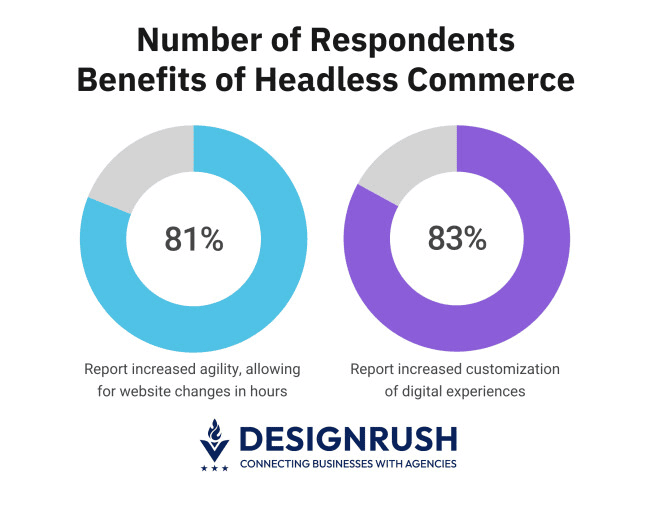
One of the biggest advantages of headless architecture is the ability to test new ideas quickly. About 81% of businesses report that headless commerce provides greater agility for website changes, and 83% report increased customisation of digital experiences. This flexibility means you can conduct A/B testing of different UI elements and layouts without disrupting backend operations.
The result is that brands can identify which experiences resonate best with their audiences and refine their digital touchpoints to maximise engagement and sales. This means no more waiting weeks to test a simple design change.
Supporting global scalability:
For businesses with international ambitions, headless commerce offers significant advantages. Most enterprise headless platforms provide virtually limitless scalability, enabling companies to handle increasing traffic and transactions as they expand.
As we have just seen, 83% of respondents indicate that headless e-commerce platforms offer ample opportunities for customising digital experiences. This adaptability allows companies to quickly launch new storefronts, enter new markets, and target different audiences simultaneously. When expansion opportunities arise, your technology won’t be the bottleneck.
Which platforms and tools support headless commerce?
The headless commerce platform landscape has exploded in recent years. With the market projected to reach £7034.7 billion by 2029, you have more options than ever, but that also means more decisions to make.
The key is finding a platform that matches your business needs and technical capabilities. Some businesses need enterprise-grade solutions with complex API management, while others want something they can deploy quickly without a massive development team.
Overview of top headless e-commerce platforms:
Several platforms have emerged as leaders in the headless commerce space:
- Shopify Plus – Offers Hydrogen (React-based framework) and Oxygen (hosting solution) for building custom storefronts
- BigCommerce – Provides robust REST and GraphQL APIs with multi-storefront capabilities
- Adobe Commerce (formerly Magento) – Features API-first architecture with GraphQL, REST, and SOAP support
- Commercetools – Pure headless experience with over 300 API endpoints
- Salesforce Commerce Cloud – Enterprise-grade solution for complex B2B/B2C scenarios
Each of these platforms approaches headless commerce differently. Some started headless from day one, while others evolved their traditional platforms to support headless architecture.
Pros and Cons of Shopify Plus, BigCommerce, and Adobe Commerce:
When evaluating headless commerce platforms, it helps to understand what each one does well and where they might fall short:
- Shopify Plus:
- Pros: Quick deployment, excellent development tools, free global hosting via Oxygen
- Cons: B2B requires add-ons, API limits on complex data
- BigCommerce:
- Pros: Extensive API access, multicurrency compatibility, social media integration
- Cons: Limited modularity, requires additional tools for complex catalogue management
- Adobe Commerce:
- Pros: Advanced API architecture, PWA Studio integration, Page Builder compatibility
- Cons: Higher implementation costs, steep learning curve for developers
The right choice depends heavily on your specific situation. A mid-market retailer might thrive with Shopify Plus, while an enterprise with complex B2B requirements might need Adobe Commerce’s advanced capabilities.
How to choose the right platform for your needs?
A headless commerce platform selection comes down to four key factors:
- Business size and complexity – Enterprise needs differ significantly from mid-market requirements
- Developer resources – Some platforms demand more technical expertise than others
- Integration requirements – Evaluate compatibility with your existing tech stack
- Scalability needs – Ensure the platform can grow with your business
The extent to which you build vs. buy will largely depend on factors such as business requirements, your team’s technical expertise, existing infrastructure, scalability needs, and budget constraints.
Importance of working with an e-commerce SEO company:
Headless commerce implementations create unique SEO challenges that many businesses don’t anticipate. Without proper setup, client-side code can harm search visibility — something that can be devastating for organic traffic.
Partnering with an expert e-commerce SEO company can help understand how to implement server-side rendering or static generation to maintain indexability while preserving the performance benefits of headless architecture. Such expertise of an e-commerce SEO company becomes critical when your site’s search visibility is on the line.
Conclusion: Adapting Headless Commerce for More Business Flexibility
Headless commerce decouples the back end and front end, allowing for endless possibilities in customisation, personalisation, and new integrations. It’s true that headless commerce requires careful planning, but if your current architecture is holding you back from getting new experiences to market as fast as you’d like, the benefits tend to be worth the effort if the implementation is well-planned.
The businesses that will thrive in 2026 and beyond are those with the technical architecture to adapt and innovate quickly. Headless commerce provides that foundation: giving you the tools to build whatever experience your customers need, however they want to engage with your brand.
Ready to explore whether headless e-commerce implementation is right for your business?
Start by evaluating where your current platform limitations are costing you the most in terms of speed to market and customer experience quality.
Get in touch with us if you need expert SEO services from an e-commerce SEO company.
FAQs:
Headless commerce separates the frontend (what customers see) from the backend (where business logic and data reside). This allows for greater flexibility and customisation compared to traditional e-commerce platforms, where frontend and backend are tightly coupled.
Headless commerce can boost conversion rates, reduce bounce rates through faster load times, enable rapid experimentation and A/B testing, and support global scalability, ensuring a significant boost in your business performance by decoupling the front and backend of your online store.
The core components include a frontend presentation layer, backend commerce engine, APIs and microservices for communication, and integration capabilities with third-party tools. This structure allows for independent development and optimisation of each component.
Popular platforms supporting headless commerce include Shopify Plus, BigCommerce, Adobe Commerce (formerly Magento), Commercetools, and Salesforce Commerce Cloud. Each platform has its own strengths and is suited for different business needs and technical capabilities.
Headless commerce is growing in popularity due to changing consumer behaviour, the rise of omnichannel and mobile-first shopping, and the need for speed and flexibility in e-commerce. It allows businesses to adapt quickly to market changes and deliver personalised experiences across multiple channels.