
Why Brands Are Moving Away From Fully In-House Ecommerce Teams
20th February 2026 / in Ecommerce / by Ruturaj Kohok
- Reading time: 9 mins 25 Sec
In today’s world, managing an ecommerce brand is not easy. Despite having an in-house ecommerce team, adding analytics tools, CRM systems, and automation platforms, and investing in performance marketing, brand founders can still face ecommerce execution challenges.
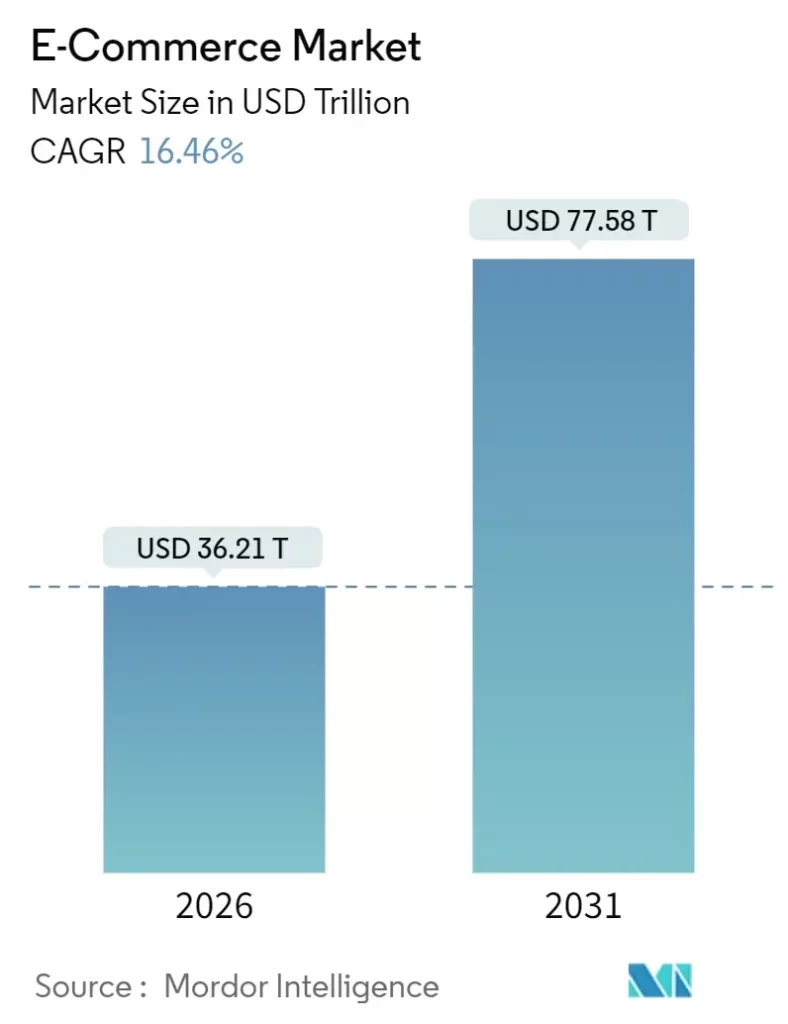
According to an industry report by Mordor Intelligence, the global ecommerce market continues to expand: in 2026, it stands at $36.21 trillion, and is expected to grow at a CAGR of 16.46% and reach $77.58 trillion by 2031.
Source: Mordor Intelligence
However, this expansion comes at the cost of increased ecommerce operational challenges. To keep up with it, online retail companies have to focus on factors such as ecommerce platform management, such as Shopify, BigCommerce, and Adobe Commerce, lifecycle automation, order management systems, inventory management tools, omnichannel performance sync, and more.
In-house ecommerce teams can work with simpler execution models; however, as execution complexity grows, digital commerce organisations operate across a diverse marketing technology stack, requiring specialisation and cross-channel coordination that an in-house team cannot deliver. This underscores the need for a transition away from fully in-house teams towards ecommerce specialist partners that offer operational scalability and cost efficiency, such as Nethority.
How Modern Ecommerce Execution Has Changed?
Modern ecommerce execution models involve cross-channel selling, including website, social commerce, retail partnerships, marketplace presence, and quick commerce. Because of this, customers are not simply buying products; they are now comparing experiences across devices, channels, and brands, making it non-negotiable for D2C brands to focus on personalisation, speed, accuracy, and customer support.
This requires ecommerce managers to shift their commerce team structures that move from generalist roles to specialisation and expertise across CRO, paid media, SEO, lifecycle automation, analytics, creative, and operations.
Why Do Brands Move Away From In-House Ecommerce Teams?
Growing Execution Complexity Across Ecommerce Platforms:
Ecommerce platforms such as Shopify, BigCommerce, and Adobe Commerce are not just building your online stores anymore; they offer a diverse ecosystem with their app marketplaces, integrations, and APIs that impact operational efficiency and conversions. This becomes complex for a generalist to navigate.
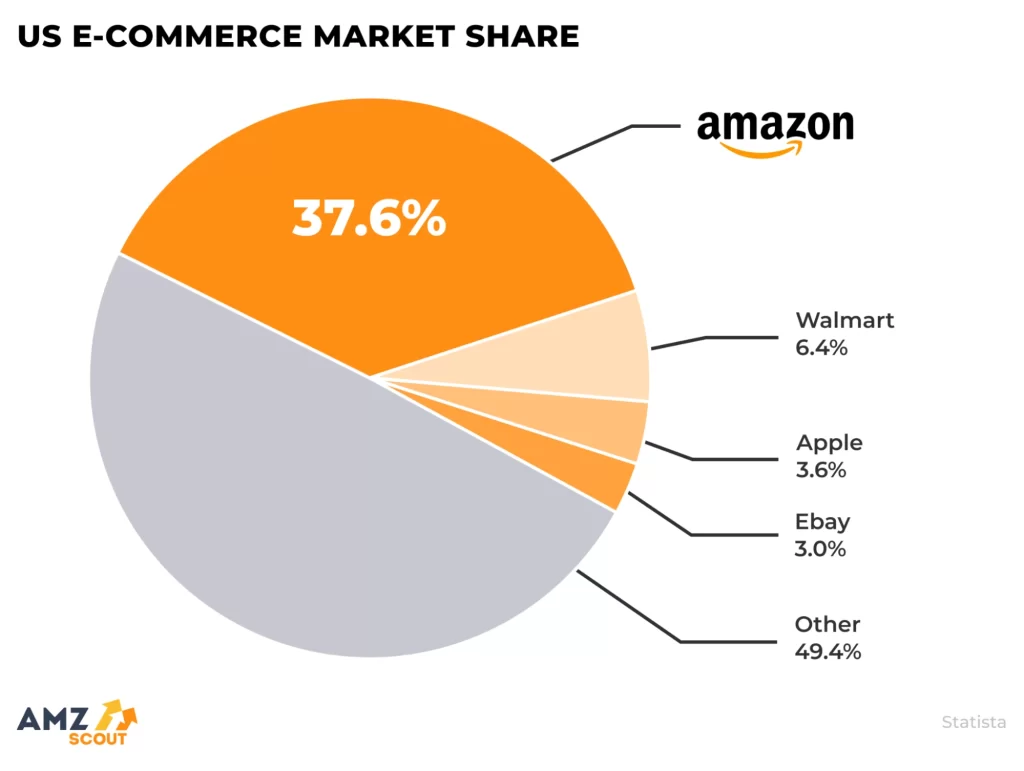
As per a Statista study published by AMZ Scout, marketplaces such as Amazon hold 37.6% of the US ecommerce market share, whereas eBay holds merely 3% and Walmart holds 6.4%. This shows the growing importance of marketplace execution, which requires a specialised skillset.
With these changes in the global ecommerce market, more and more operations managers and brand founders are moving from internal teams to partnering with specialised talent.
Pressure on Ecommerce Managers and Digital Commerce Leaders:
In many D2C brands, ecommerce managers are required to perform the role of many functional specialists, including campaign management, reporting and analytics, website changes, vendor coordination, and operational scalability, which becomes nearly impossible.
This can cause decision fatigue, causing performance to drop. This is another reason why ecommerce brands are shifting from internal teams to execution partners like Nethority, so that ecommerce managers can focus on prioritisation, while specialists can look after execution.
Demand for Operational Scalability and Cost Efficiency:
Ecommerce growth is not linear; there are seasonal spikes, launch peaks, and high-performing campaigns. This can require different resource allocation at different performance periods. Having an in-house ecommerce team can get extremely overloaded during peak performance periods, and may stay underutilised during slower times.
Hiring execution partners can solve this problem, which is why ecommerce execution models are shifting from hiring internal teams to employing the services of specialists as and when needed.
Challenges of Fully In-House Ecommerce Teams:
Talent Acquisition and Ecommerce Resource Gaps:
An in-house ecommerce team needs skills for paid media, content, SEO, design, CRO, lifecycle management, operational management, analytics and reporting, inventory management, automation, and more.
Source: Pro Profs
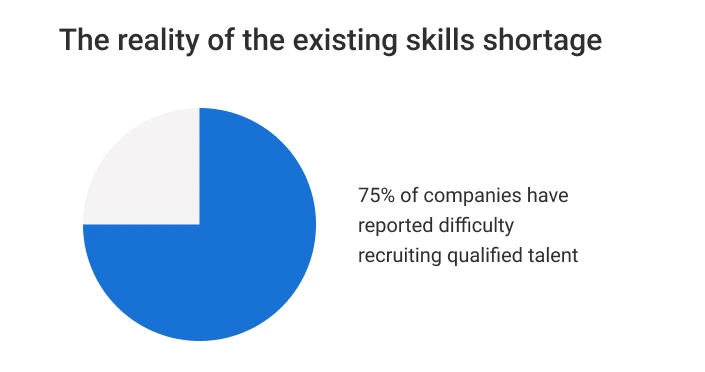
However, according to ProProfs, 75% of ecommerce companies face difficulties hiring qualified talent. This makes the process of talent acquisition more tedious and highlights ecommerce resource gaps more prominently. Instead of hiring an internal team and training them, a much more time and cost-efficient option is to partner with ecommerce execution specialists.
Managing Ecommerce Teams Across Multiple Functions:
Even when talent acquisition is done well, managing ecommerce teams can still be difficult because of overlapping roles. Generalist roles might have to look after revenue, CRM, customer support, website development, marketing, inventory management, and eliminating operational roadblocks, which can put too much pressure on one role and slow the speed of execution.
Technology Stack Overload and Execution Bottlenecks:
A modern ecommerce marketing technology stack includes personalisation, email and SMS, customer support, CRM systems, analytics, and attribution tools, to help understand which touchpoint drives conversions. It also includes managing analytics and automation stacks such as Salesforce and HubSpot to manage customer relationships, sales pipelines, and marketing operations.
However, it is not the number of tools that causes overload; it’s the failure to implement them in the workflow. A small, generalist in-house ecommerce team cannot manage tracking, experimentation, dashboard monitoring, strategy implementation, and continual optimisation all at once.
Common Failure Patterns in In-House Ecommerce Execution:
As a specialist execution partner, Nethority has identified some common failure patterns because of ecommerce operational challenges faced by D2C brands.
The most consistent pattern is a strategy without an efficient means of execution. Reporting that leads to nowhere, underused tools, and closed execution loops all give rise to execution failures. Lack of skills and workforce volatility can also lead to execution failure. The last failure pattern is campaign velocity breakdown, where campaigns are not launched, tested, and optimised efficiently and in time.
All these patterns nudge digital commerce leaders to move towards functional specialists from in-house ecommerce teams for better performance and execution.
In-House vs Outsourced Ecommerce Teams:
Defining In-House vs Outsourced Teams:
In-house ecommerce teams are people employed in online retail companies who look after strategy as well as execution. Outsourced teams, on the other hand, include partnering with ecommerce consultants or functional specialists for specific functions to reduce ecommerce resource gaps.
More and more ecommerce brands are choosing a middle ground, a hybrid team structure where internal leadership consists of founders, digital commerce leaders, ecommerce managers, and operations managers for strategising effectively, who collaborate with external specialised execution teams that deliver performance.
Cost Structure and Resource Allocation Differences:
In-house teams in an ecommerce company are less flexible when it comes to skillset and performance, but require a consistent payroll. However, outsourced teams can be variable in cost and more flexible, but need monitoring and governance. This is why many ecommerce brands go for hybrid team structures for better resource allocation and performance in execution complexity, along with specialisation and capacity whenever required.
Due to hiring difficulties, setting up an in-house ecommerce team can become slower and more expensive, which can impact growth. Hidden management overheads are another reason for a hybrid model, as even in-house teams need to be hired, onboarded, trained, and managed. The time, effort, and cost associated with this can be reduced significantly by hiring functional specialists for execution.
Agility and Speed of Ecommerce Execution:
There are new updates in the ecommerce landscape very frequently, right from newer ad formats and marketplace guidelines to privacy changes and platform updates. In-house teams cannot keep up with these, as they can merely react to these updates but not predict them. Outsourced teams, on the other hand, can predict as well as respond to these updates in less time because of their expertise and specialisation.
In-House vs Outsourced Execution Comparison:
| Criteria | Fully In-House Ecommerce Teams | Outsourced / Hybrid Ecommerce Teams |
| Cost Structure | Fixed payroll costs, benefits, and hiring overhead | Variable cost model based on scope and execution demand |
| Scalability | Scaling requires new hiring cycles (slow) | Can scale execution capacity up or down quickly |
| Speed of Execution | Dependent on internal bandwidth | Faster deployment through specialist execution pods |
| Specialization Depth | Generalists often cover multiple roles | Dedicated functional specialists (CRO, lifecycle, analytics, paid media) |
| Tool Stack Management | Internal teams must manage the entire marketing technology stack | Specialists often manage and optimise specific tool ecosystems |
| Operational Flexibility | Limited flexibility during seasonal spikes | Higher flexibility for campaign bursts and peak periods |
| Hiring & Talent Risk | Subject to talent shortages and turnover | Talent risk is distributed across the agency/partner ecosystem |
| Management Load | High coordination overhead internally | Monitoring required, but execution load distributed |
| Innovation & Best Practices | Limited exposure to cross-industry learnings | Access to cross-brand insights and evolving best practices |
| Platform Adoption Speed | Slower adoption due to internal backlog | Faster implementation of new ecommerce platform capabilities |
| Execution Bottleneck Risk | High if key employee exits | Lower dependency on a single individual |
Limitations of In-House Ecommerce Execution:
Skill Silos Within Ecommerce Company Structures:
In-house commerce team structures usually operate independently from each other, which can create blind spots in your overall operational scalability. These skill-based silos can offer inconsistent customer experiences in terms of messaging, service, and pricing, due to an uneven, impractical, or imbalanced multichannel strategy, which can hamper the positioning of your D2C brand.
Slower Technology Adoption:
The ecommerce platforms and marketing technology stacks evolve rapidly. In-house teams can be overloaded with daily operational responsibilities, which can delay technology adoption. Because of a lack of expertise, in-house teams can also show resistance to new analytics and CRM systems, which could be key to operational scalability. Headless and composable commerce models are also increasingly gaining popularity because they offer ease in scalability, the adoption of which could be delayed by in-house teams.
Burnout Among Brand Founders and Operations Managers:
In case of issues with execution in an in-house ecommerce team, brand founders and operations managers have to step in. This can lead to burnout, decision fatigue, and slow growth over time, as more time is spent on aligning execution and less on high-impact strategising and positioning.
When Should a Brand Move Beyond a Fully In-House Ecommerce Team?
If the execution complexity is higher than the team capacity of your ecommerce brand, it is a sure-shot sign of the need to move beyond a fully in-house ecommerce team. Additionally, if your team is not able to operationalise the tool stack or execution backlog stacks up, you should move to an outsourced or a hybrid team structure.
Also, as you move through different revenue stages as you scale, you should go for different commerce team structures with better expertise to avoid stagnation.
Read more: What an Ideal E-commerce Team Structure Looks Like at Different Revenue Stages?
Ecommerce Execution Without Large Internal Teams:
Hybrid Team Structures as a Modern Solution:
Hybrid team structures are ideal for ecommerce execution as they keep up with the variable demand, the requirement of specialised skills, and continuous iteration. In the hybrid model, internal ecommerce managers and leaders offer direction and priorities, whereas ecommerce consultants drive specialist execution. The role of fractional ecommerce specialists is also gaining popularity because it offers cost efficiency while also improving execution.
Distributed Expertise for Online Retail Companies:
Ecommerce companies do not need to hire full-time roles, as distributed expertise can offer D2C brands access to a cross-platform experience because of functional specialist roles. This is important because ecommerce platform ecosystems, customer expectations, and marketplace guidelines are all very volatile. Distributed expertise can help online retail companies stay on top of all updates in the ecommerce ecosystem without wasting time.
Sustainable Commerce Team Structure for Scaling:
The most sustainable commerce team structure for operational scalability is internal leadership combined with specialist execution. This makes the roles of each part very clear. The internal leadership can offer clear priorities and KPIs and hold ownership, while the external execution team turns these insights into actions.
Final Thoughts: A Smarter Approach to Managing Ecommerce Teams
Ecommerce brands are moving from fully in-house teams to more hybrid team structures as a structural response to the increasing execution complexity. Many brands function across different channels, marketplaces, technology stacks, analytics tools, and CRM systems. This increases the difficulty in managing execution internally, as in-house teams cannot keep up with the updates that constantly face the ecommerce landscape.
Instead of hiring more in-house members, it is more cost-efficient to partner with ecommerce specialist execution agencies such as Nethority for better operational scalability, because it goes without saying that brands that align people, platforms, and processes today will be the ones to scale sustainably in the coming complex times in the global ecommerce market.
FAQs:
Outsourcing is often considered to be better than building an in-house internal team as it can offer better specialisation and skill sets that might take more time, effort, and money to hire, onboard, and train the internal team.
The ecommerce execution and operations process consists of implementing systems, putting together teams and tools for optimal performance, and continually improving the workflows needed to support scalable online growth.
Ecommerce teams struggle to scale because of a fixed headcount, increasing needs for specialisation, inability to operationalise tool and technology stacks, and increasing operational complexity.
A hybrid ecommerce team structure is defined by internal leadership and ownership while partnering with external specialists for improved execution and operational scalability.
Ecommerce teams can be managed effectively through clear ownership, focused KPIs, strong monitoring, specialist support, and execution models that are aligned with growth stages.