
From Browsing to Buying: How AI Reduces Ecommerce Friction
26th February 2026 / in Ecommerce / by Ruturaj Kohok
- Reading time: 9 mins 25 Sec
Ecommerce friction is any hurdle in the shopping journey of ecommerce shoppers that slows them down from making a purchase. Examples of friction include irrelevant ecommerce search results, slow website speed, complicated checkout systems, and difficult-to-navigate product listing pages. All these can severely impact the ecommerce conversion rate, especially when ecommerce personalisation is missing, leading to users abandoning their carts.
Source: Mailmodo
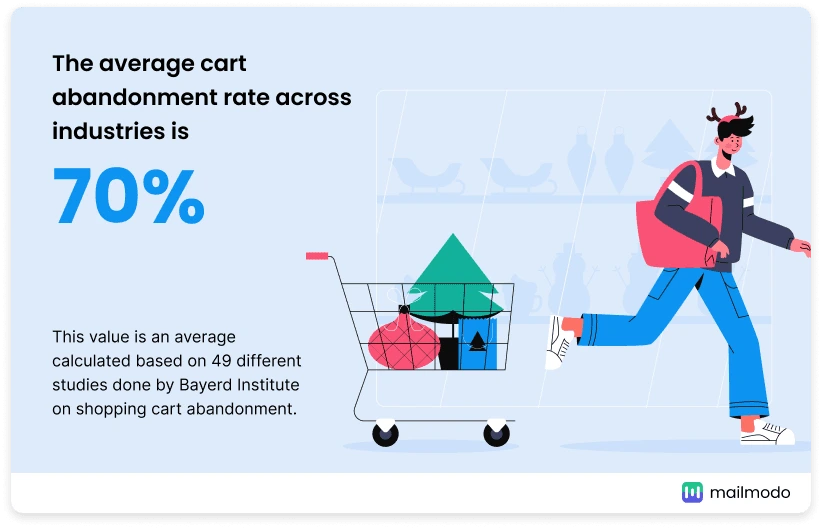
According to a study by the Baymard Institute published by Mailmodo, the average cart abandonment rate among online buyers is 70%, which is a clear indicator of how often browsing doesn’t lead to buying.
Also, when retail customers cannot find the products they desire, they exit the customer journey because of gaps in product discovery. This is often found in online marketplaces such as the Amazon Marketplace or Shopify stores, where there is immense competition.
Even through these gaps, the rise of Artificial Intelligence is playing a key role in turning browsing into buying. Ecommerce marketing experts like Nethority have been using AI & ecommerce personalisation to offer frictionless ecommerce experiences to users by offering personalised product recommendations, smart product discovery, automated checkout systems, and ecommerce chatbots.
From our experience with ecommerce brands on Shopify and marketplaces, AI-powered personalisation and search optimisation have always helped in reducing bounce rates and improving conversion rates.
Let’s explore it in detail.
Understanding Ecommerce Friction Across Shopify Stores, Amazon Marketplace, Google Shopping and D2C Websites:
For various ecommerce platforms such as Shopify stores, Amazon Marketplace, and Google Shopping, the effect of friction is different. For Shopify stores, the struggle is often with respect to search relevance and checkout optimisation; for the Amazon marketplace, it is related to scale, ranking, and competition.
Common Conversion Barriers in Ecommerce Customer Journeys:
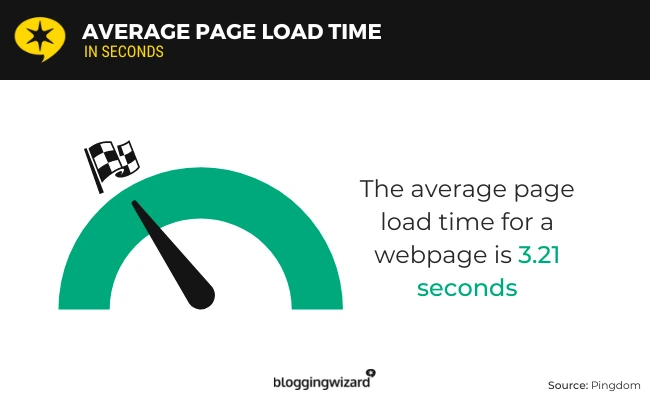
One of the most common conversion barriers is the slow speed of your ecommerce website. According to a study by Blogging Wizard, the average page loading time for a webpage is 3.21 seconds. Anything more than that, and the bounce rates start to increase, and engagement goes down.
Source: Pingdom
Another conversion barrier is poor search relevance; if your digital consumers cannot find what they’re looking for, they become frustrated, which leads to browsing fatigue. If at all, they get through that, complicated checkout systems and payment friction can create hesitation, especially in first-time buyers. This barrier can hamper conversions.
How Checkout Friction and Poor UX Reduce Ecommerce Conversion Rates
If your retail website has checkout friction, it can turn away your online buyers, reducing the average order value and the number of returning customers. To avoid revenue loss across different stages of the funnel, checkout friction reduction is critical.
Source: Nico Digital
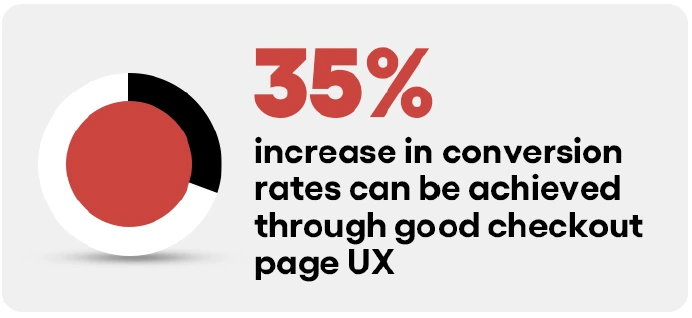
According to research by the Baymard Institute published by Nico Digital, optimising checkout experiences can increase conversion rates by up to 35%.
For UX designers and CRO specialists, this friction is simply a lost opportunity. Inefficient customer experience can adversely impact customer retention, ecommerce conversion rates, and overall long-term growth of your ecommerce stores.
AI-Powered Product Discovery Using Machine Learning Models and Natural Language Processing:
The foundational bricks of AI ecommerce include machine learning models, natural language processing, predictive modelling, and behavioural targeting. These advanced technologies identify and analyse the behaviour of your digital consumers for customer journey optimisation. Such in-depth analysis and semantic understanding enables ecommerce personalisation and helps ecommerce sites to surface for relevant searches.
AI Product Search on Shopify, Amazon, and WooCommerce Platforms:
AI product search allows for semantic searches, purchase intent detection, and dynamic ranking engines. Shopify offers AI-powered apps that integrate predictive search recommendations and personalised sorting options. Similarly, Amazon Marketplace has ranking engines that analyse signals such as prices, reviews, and behaviour.
Current state-of-the-art generative AI models, such as large language models, are further enhancing ecommerce product search by better comprehending natural search queries and buying intent.
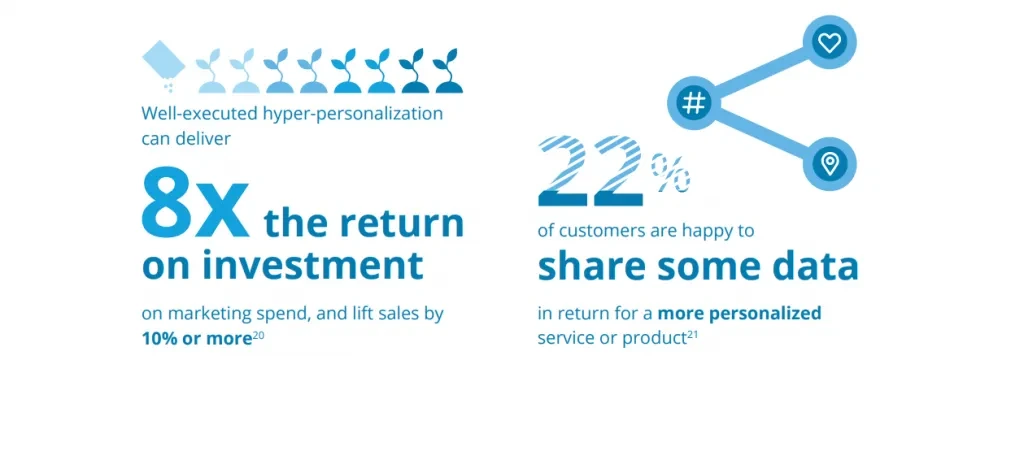
The use of AI on a scale as big as marketplaces has transformed how people search, and has made ecommerce personalisation a critical need for all ecommerce sites. In fact, as per a Deloitte study published by Referral Candy, well-executed hyper-personalisation in ecommerce stores can deliver 800% ROI on their marketing spend, increasing the overall sales by 10% or more. Also, to get such personalised experiences, 22% users are willing to share more data. This makes intent-based marketing imperative in today’s ecommerce landscape.
Source: Referral Candy
Visual Search, Voice Commerce, and Intent-Based AI Marketing
There are many visual search tools available that enable online buyers to search for what they are looking for by uploading images in their query. Moreover, voice technology like Google Assistant and Alexa is also gaining popularity, which can help your ecommerce site rank in AEO and voice searches. This significantly influences ecommerce search behaviour of digital consumers, particularly through mobile commerce apps.
The implementation of AI in this helps analyse intent signals, such as product views or abandoned carts. This helps experts like Nethority deliver personalised ads that are relevant and connect well with the audience, resulting in them purchasing your products.
Dive Deeper: What Is AEO? 7 Strategies To Rank in AI and Voice Search Results
AI-Driven Ecommerce Personalisation and Recommendation Engines:
The biggest milestone that nudges a user from discovery to the decision stage in the funnel is ecommerce personalisation. AI product recommendation engines are dependent on behavioural targeting, predictive analytics, content-based filtering, and hyper-personalisation, all of which significantly impact ecommerce success.
These systems take into consideration the real-time behaviour of the user, their browsing patterns, and their purchase history to deliver a personalised shopping experience.
Collaborative Filtering and Predictive Recommendations for New and Returning Customers:
The analysis and comparison of user behaviour patterns to offer trending product recommendations is collaborative filtering. The product can be matched with the user’s preference through content-based filtering.
To support ecommerce personalisation experience for first-time buyers, AI considers contextual signals such as the session behaviour, device, and location of the user. For returning customers, AI helps create dynamic landing pages with tailored content and product listings for the best results.
How AI Recommendation Engines Increase AOV and Ecommerce Conversion Rate
AI product recommendation engines help in increasing the Average Order Value (AOV) by cross-selling, upselling, and cart-based recommendations. When a user adds a product to their cart, they see a list of complementary or similar products in real time. These AI-based ecommerce personalisation strategies can uplift revenue.
AI Chatbots, Conversational Commerce, and CRM Integrated Virtual Assistants:
AI-powered ecommerce chatbots and virtual shopping assistants can be utilised to automate support throughout your website and marketplace to identify intent, answer questions, and integrate with your CRM systems. Natural Language Processing also enables conversational commerce for better, more human-like ecommerce chatbots, thus reducing the dependency on manual customer support agents.
Dive Deeper: AI Chatbots in Ecommerce: How They Improve Sales and Customer Support
AI-Powered Checkout Optimisation and Cart Abandonment Reduction:
For checkout friction reduction, you can implement address validation, smart form filling, and more. Automated checkout systems integrate AI that can help with real-time problem-solving, ensuring all concerns and questions are answered instantly.
Source: Market.us
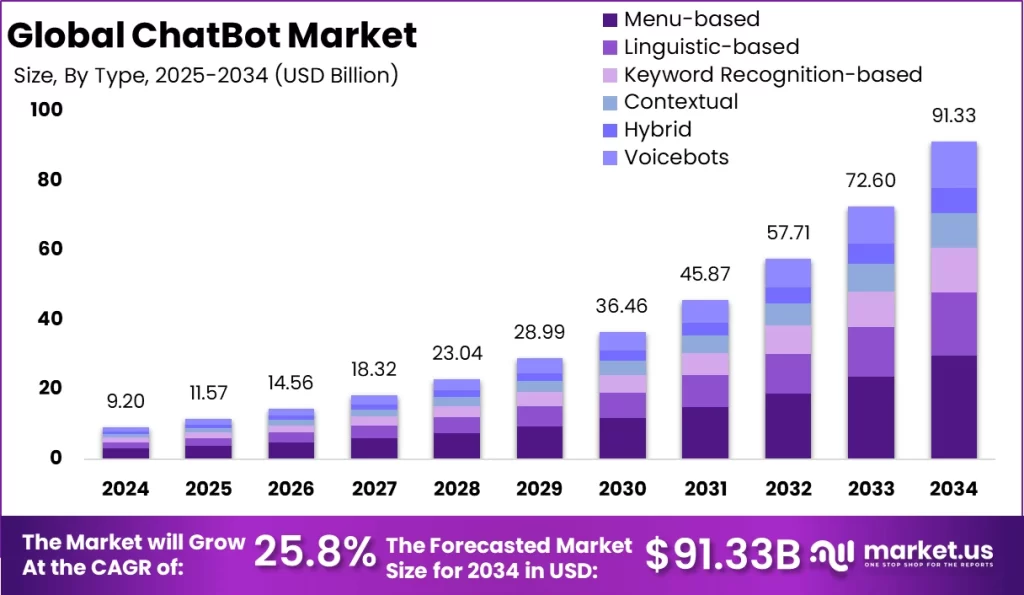
According to the projections by Market.us, the global chatbot market is expected to reach $91.33 billion by 2034, showing growing trust in conversational interfaces. This can lead to fewer cart abandonments and convert more visitors into buyers.
Dive Deeper: Abandoned Cart Recovery: Proven Strategies to Boost Sales by 30% or More!
Omnichannel AI Experiences Across Ecommerce Websites and Marketplaces:
Omnichannel commerce refers to the seamless integration of the entire digital brand ecosystem across Shopify stores, Amazon Marketplace listings, email campaigns, and mobile commerce applications into one. This cross-platform and cross-device connection ensures that all digital consumers get a uniform messaging experience and consistent brand presence throughout.
How Data Scientists and CRO Teams Optimise AI in Ecommerce Platforms
AI ecommerce success needs data scientists, AI engineers, growth marketers, CRO specialists, and UX designers to collaborate effectively and align business goals with AI capabilities.
CRO, UX, and Growth Marketing Strategies Powered by Ecommerce Analytics:
To understand the friction points in the buyer’s journey, you can look at analytics, heat maps (using tools such as Hotjar), customer segmentation, behavioural dashboards, and funnels .This helps ecommerce marketers to understand where exactly users drop off, and what measures they need to take for conversion rate optimisation. This is the main reason why CRO is important for all ecommerce sites.
Dive Deeper: Why Conversion Rate Optimisation Is the #1 Focus for E-commerce
Using Customer Data Platforms and Predictive Analytics for Sustainable Growth:
For the purpose of obtaining a unified customer view, ecommerce companies can leverage customer data platforms (CDPs) such as Salesforce or Segment to consolidate first-party data from ecommerce sites, marketplace connections, mobile ecommerce apps, and email marketing campaigns. With a unified customer ecosystem, marketers and data scientists can provide a more accurate form of ecommerce personalisation and optimise customer experience.
Implementing dynamic pricing systems can automatically adjust the prices of your products based on competitor trends, inventory levels, and, most importantly, demand signals. AI-based fraud detection systems can also identify any potential threat in real time, ensuring higher safety. All of this adds to data-driven decision-making, which further leads to building a long-term, sustainable brand.
Final Thoughts: The Future of AI in Ecommerce: Predictive Commerce Across Shopify, Amazon, and Google Shopping
As the use of AI search experiences like Google AI Overviews and AI search engines increases, predictive commerce will become even more relevant to ecommerce brands. Instead of responding to search queries, businesses will be anticipating users’ wants and needs via predictive modelling.
Digital shopping experiences will evolve through enhanced technologies for conversational shopping, such as AI chatbots and virtual shopping assistants. There will be a rise in smart product discovery, as storefronts will automatically adjust to fit online buyer habits.
Autonomous merchandising will adjust product feeds, which will drive Google Shopping’s and Amazon marketplace visibility. Businesses leveraging AI at an early stage get a competitive advantage through improved product discovery and personalised marketing, which will optimise customer lifetime value.
Nethority, a digital marketing agency specialising in ecommerce SEO and AI-driven optimisation, recognises that the long-term success of ecommerce stores will be driven by frictionless ecommerce enabled by ecosystems such as Shopify, Amazon Marketplace, and Google Shopping that continue to leverage AI technologies. Through the integration of machine learning models, personalisation engines, and predictive analytics tools into their digital storefronts, ecommerce businesses will revolutionise the way customers shop for trending products.
FAQs:
A: By detecting purchase intent, personalising product recommendations and overall shopping experiences, and reducing decision fatigue by customer journey optimisation, AI can shape consumer buying behaviour.
A: The benefits of AI in ecommerce include offering hyper-personalisation, automated support through chatbots and virtual assistants, dynamic pricing, and overall operational efficiency.
A: AI can improve ecommerce conversion rate by improving search relevance, offering personalised products, reducing checkout friction and thereby cart abandonment, and supporting virtual shopping assistants.
A: Yes, definitely. AI can increase the AOV by offering cross-selling and upselling recommendations, product bundles, and cart-based suggestions based on user behaviour and intent.
A: The top reasons for cart abandonment include mandatory account creation, payment friction, confusing checkouts, unexpected shipping costs, and return or exchange policies.