
Why Conversion Rate Optimisation Is the #1 Focus for E-commerce in 2026
12th September 2025 / in Ecommerce / by Ruturaj Kohok
Are you still pouring money into traffic acquisition while ignoring the visitors already browsing your site?
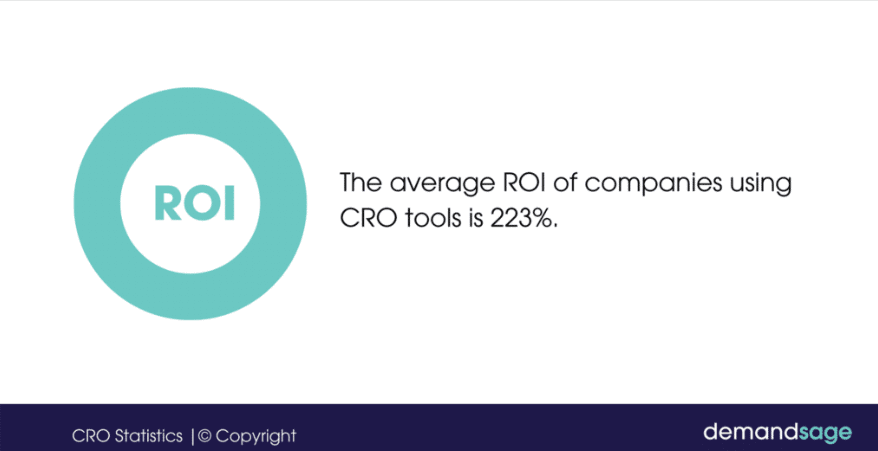
Source: Demand Sage
Check this out: Conversion rate optimisation delivers an impressive 223% average ROI increase for brands implementing it effectively. The smartest ecommerce businesses have figured out something important: they’re not chasing more traffic, they’re maximising what they already have.
Here’s the thing: instead of throwing more money at SEO or advertising campaigns, conversion optimisation makes the traffic you already attract convert more frequently. CRO also helps lower customer acquisition costs (CAC), making each new customer more profitable.
Every optimisation you put in place keeps working for you long after you implement it. Whether you’re tweaking a product page design or smoothing the checkout process, those improvements keep delivering results. Conversion rate optimisation isn’t just another marketing tactic you can try; it’s become essential for e-commerce success.
Ready to find out why focusing on CRO gives you the competitive edge you need? Let’s explore how this approach changes everything
What makes E-commerce Conversion Rate Optimisation the Top Priority for Business Growth in 2026?
Data-driven e-commerce businesses have figured out something important: conversion rate optimisation needs to take priority over traffic acquisition. This creates a leverage point that fundamentally changes how you approach digital marketing strategy.
Why is traffic alone no longer enough?
Here’s a reality check that most e-commerce sites need to hear: 97% of website visitors leave without purchasing anything.
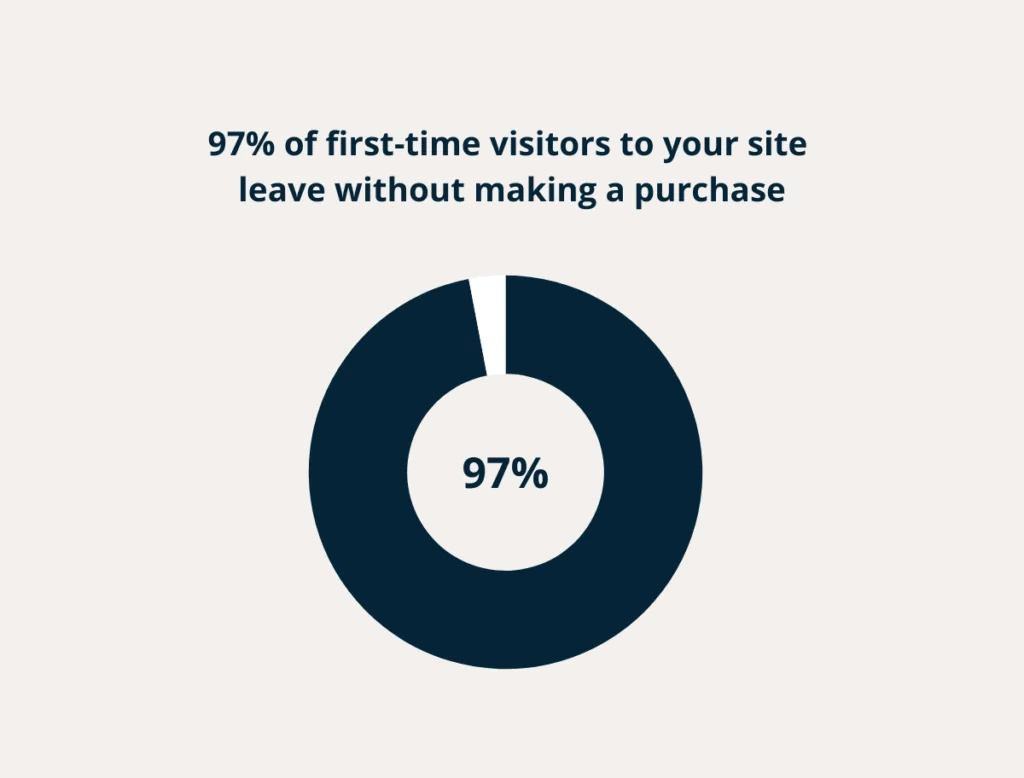
Source: Camphouse
Meanwhile, digital ad costs keep climbing quarter after quarter, with global search-ad spend rising continuously. Most brands focus heavily on acquisition, spending big on ads and chasing traffic spikes, but this approach hits diminishing returns quickly.
The role of conversion rate in digital marketing success:
Your conversion rate tells you everything about how well your marketing actually works. This metric is calculated as follows:
(Number of Conversions / Total Number of Visitors) x 100
But e-commerce conversion rate optimisation does more than measure effectiveness; conversion metrics reveal user behaviour patterns throughout the customer journey and spotlight exactly where people hit roadblocks. They also help marketers refine targeting, messaging, and creative elements based on what’s actually happening.
How e-commerce conversion optimisation drives profitability?
CRO creates a compounding effect on business growth that traffic acquisition simply can’t match. When each visitor costs more to acquire, even small improvements in conversion rate deliver an outsized impact.
This improved efficiency shows up in several ways:
- Lower cost per acquisition as you maximise existing traffic
- Higher return on investment for every marketing dollar spent
- Increased average order value through strategic upselling and cross-selling
Companies focusing on data-driven conversion optimisation often see significantly better performance than competitors. This proves that optimisation, rather than acquisition, represents the strategic priority for sustainable ecommerce growth in 2026.
How does CRO help you get more from existing traffic?
Getting shoppers to your store is just the first step; what happens next determines your success. Conversion rate optimisation transforms window shoppers into paying customers by enhancing the experience they have once they arrive.
Turning visitors into buyers without extra spend:
The digital marketplace demands efficiency from every marketing spend. Driving traffic is only half the battle; converting those visitors into loyal customers is where the real value emerges. A high volume of traffic without conversions is like having a busy store with lots of browsers but no buyers.
Conversion optimisation strategies help businesses increase sales without inflating their marketing budget. This approach makes every visitor count, creating sustainable growth from existing traffic rather than constantly chasing new prospects.
Reducing bounce rates and cart abandonment:
Cart abandonment is one of the biggest missed opportunities in e-commerce. About 70% of online shopping carts get abandoned before purchase completion. That translates into potential lost revenue of £14.29 billion annually.
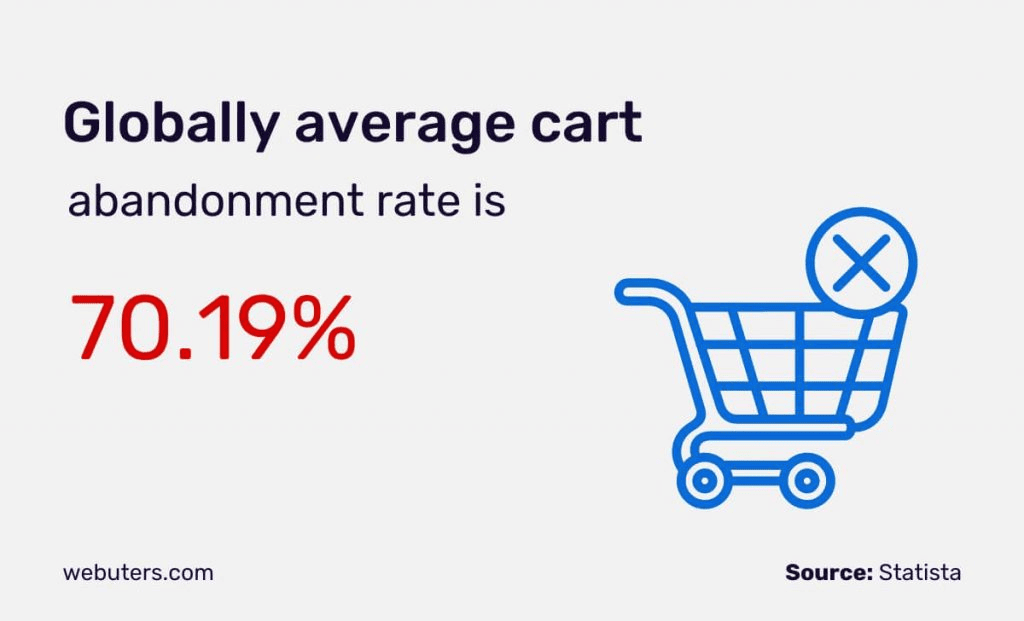
Source: Webuters.com
The main reasons? Unexpected costs, complex checkout processes, and limited payment options. But here’s the good news: specific strategies can recover these almost-customers.
You can make a real difference by:
- Streamlining the checkout to three essential screens
- Eliminating unnecessary form fields and offering guest checkout
- Implementing abandoned cart recovery emails
Address these friction points by implementing conversion rate optimisation services, and you’ll see business growth without acquiring additional traffic.
Personalising user journeys for better engagement:
Personalisation isn’t a luxury anymore; it’s become essential for engaging and retaining customers.
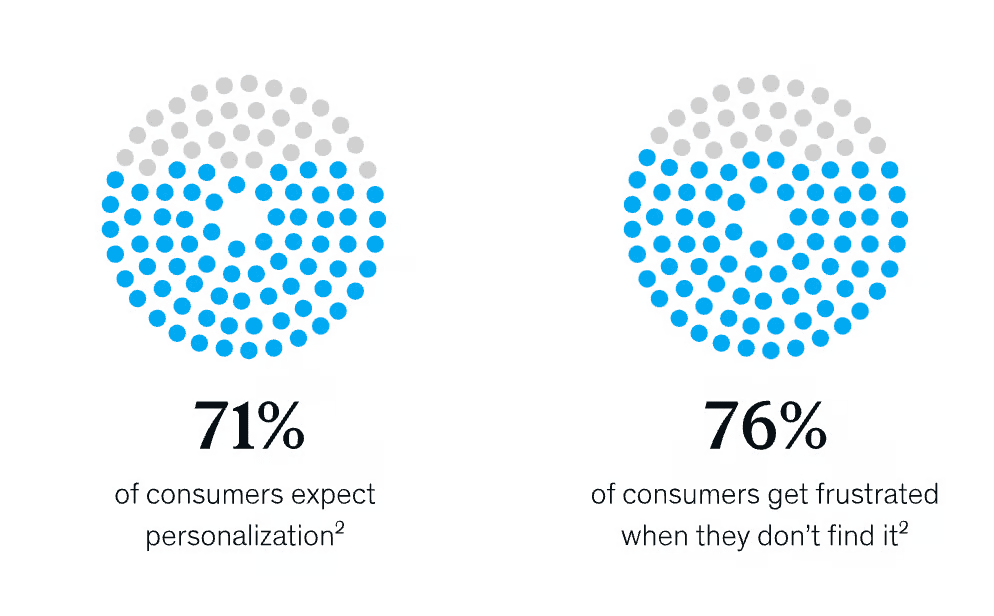
Source: Nextiva
Check this out: About 71% of consumers now expect personalised interactions, with 76% expressing frustration when they don’t receive them. Additionally, companies excelling in personalisation generate more revenue than those that don’t.
Effective personalisation tailors each touchpoint to individual preferences. This creates a flywheel effect where recurring interactions generate more data, enabling even more relevant experiences that strengthen customer lifetime value and loyalty.
What strategies are essential for successful conversion optimisation?
Successful conversion rate optimisation requires a scientific approach backed by solid data analysis. Marketers who use customer segmentation to deliver personalised experiences to specific groups deliver measurable results.
Using behavioural analytics and funnel tracking:
Behavioural analytics transforms raw visitor data into actionable insights by showing you exactly how users interact with your store. This approach tracks what visitors click on, how long they spend on specific pages, and where they abandon their purchase journey. You can identify friction points that cause drop-offs, which lets you make targeted improvements where they matter most.
Implementing behavioural analytics helps e-commerce stores understand customer needs, run more effective campaigns, personalise digital products, and increase customer loyalty. A comprehensive conversion rate optimisation audit helps you move beyond surface-level metrics to understand the “why” behind user behaviour.
Optimising calls-to-action and landing pages:
Your CTAs function as the closing element in your digital sales conversation. The most compelling CTAs start with action verbs like “Get,” “Start,” or “Discover”, showing visitors exactly what happens after they click. For landing pages, focusing on a single goal produces higher conversion rates than pages with competing calls to action.
Your landing page should minimise distractions, maintain message consistency with your ads, and feature visible CTAs. Think of each landing page as a focused sales conversation; everything should guide visitors toward one clear action. Conversion rate optimisation experts can help you optimise your landing pages and CTAs for better conversions.
Applying insights from conversion rate optimisation services:
Professional services for CRO combine behavioural insights, UX improvements, and A/B testing to reveal what motivates customers to take action. These conversion rate optimisation experts analyse user behaviour, conduct funnel analysis, and examine heatmaps to identify conversion bottlenecks.
One advantage of working with experts is having people who focus on data-driven decisions rather than guesswork. They provide measurable improvements, which is especially valuable when you need to prove ROI to stakeholders. Such experts can also conduct a conversion rate optimisation audit to figure out what factors are killing your performance and how you can improve.
Segmenting users for targeted experiences:
Another strategy for conversion rate optimisation is customer segmentation. It improves marketing effectiveness by tailoring experiences to specific groups dramatically. When you divide your audience based on shared characteristics, you can deliver highly relevant messaging; personalised campaigns achieve significantly higher conversion rates than generalised ones.
You can segment customers through multiple dimensions, including behavioural patterns, demographics, geographic location, and even technology usage. This targeted approach not only enhances customer experience but also extends the customer lifecycle, creating lasting loyalty. The more specific your segments, the more relevant your messaging becomes.
How can Conversion Optimisation Support Long-Term E-commerce Success?
The real value of conversion rate optimisation extends far beyond immediate revenue gains. Strategic focus on optimisation creates compounding advantages that strengthen businesses over time.
Creating a culture of data-driven decisions:
Forward-thinking organisations treat conversion optimisation as part of their company DNA rather than a one-off project. This approach embeds testing, analysis, and improvement into regular operating rhythms. High-performing teams share one goal: using insight-driven hypotheses to improve user experiences and increase conversion rates.
The shift starts with democratising experimentation across departments. Marketing, sales, product, and leadership teams need to see e-commerce conversion rate optimisation as a growth discipline that impacts every department. When testing becomes routine, businesses move away from guesswork and toward evidence-based decisions that compound over time.
Improving SEO through better user signals:
CRO directly enhances SEO performance through improved user engagement metrics. When visitors actively engage with optimised content, search engines interpret this as a sign of high-quality, relevant material. Metrics like bounce rate reduction and increased time-on-site signal to search engines that users find what they need.
This creates a powerful synergy where conversion rate optimisation improvements amplify organic rankings. Engaged users are more likely to convert and share content, creating a cycle where better user experience drives both conversions and search visibility.
Scaling sustainably with continuous testing:
Effective organisations build testing into their workflow. Successful teams celebrate learning from every test, regardless of outcome. The approach yields compounding advantages where each gain builds upon the last. Revenue increases without relying solely on more traffic. This sustainable scaling model becomes especially valuable as acquisition costs continue rising across digital channels.
Aligning CRO with business KPIs:
High-impact conversion optimisation programs connect directly to specific business objectives. Leading teams establish clear KPIs like conversion rate, cart abandonment rate, and customer lifetime value. Through proper alignment, CRO strategies support broader goals like increasing sales, improving customer retention, and enhancing brand awareness.
The key lies in ensuring every optimisation effort serves measurable business outcomes. When CRO aligns with company-wide objectives, it becomes an essential driver of sustainable growth rather than just another marketing initiative.
Final thoughts: The role of conversion rate optimisation for e-commerce business growth
The truth is, conversion rate optimisation has become the defining factor that separates successful e-commerce businesses from those struggling to grow in 2026. Smart businesses have shifted their focus from chasing more traffic to maximising the value of visitors they already attract.
CRO creates a compounding effect where each small improvement builds on the last; it’s something traffic acquisition simply cannot match. While digital advertising costs keep climbing and competition gets fiercer, businesses that optimise conversions gain sustainable advantages that grow stronger over time.
Conversion optimisation is more than a technical practice. It’s a business philosophy built around understanding your customers through data rather than guesswork. The companies that embrace systematic testing and ecommerce seo optimisation as part of their culture will outperform those still throwing money at traffic acquisition.
If you’re thinking about where to focus your efforts, the choice is clear. Companies that extract maximum value from existing traffic consistently outperform those merely chasing more visitors. The question isn’t whether you should prioritise conversion rate optimisation; it’s how quickly you can make it central to your business strategy.
FAQs:
Conversion rate optimisation (CRO) is the process of improving the percentage of website visitors who take desired actions, such as making a purchase. It’s crucial for e-commerce in 2026 because it maximises the value of existing traffic, increases ROI, and provides a competitive edge in a crowded digital marketplace.
CRO directly impacts profitability by increasing sales without additional marketing spend. For example, improving your conversion rate lowers customer acquisition costs and improves overall marketing efficiency, effectively increasing your revenue.
Successful CRO strategies include using behavioural analytics to understand user behaviour, optimising calls-to-action and landing pages, personalising user journeys, and segmenting customers for targeted experiences. Continuous testing and data-driven decision-making are also crucial.
CRO complements SEO by improving user engagement metrics, which are important ranking factors for search engines. When visitors actively engage with optimised content, it signals quality and relevance to search engines, potentially boosting rankings and organic traffic.
Yes, CRO supports long-term ecommerce success by creating a culture of data-driven decisions, enabling sustainable scaling through continuous testing, and aligning optimisation efforts with broader business KPIs. It also helps in improving customer retention and lifetime value.