
Why Brands Are Turning to Ecommerce Specialists for Better Execution?
13th February 2026 / in Ecommerce / by Ruturaj Kohok
- Reading time: 9 mins 25 Sec
In real-world commerce execution projects, one common pattern appears repeatedly: brands often have detailed strategies documented, but execution velocity breaks down at the operational level. Strategies are no longer scarce; dependable delivery support is. Knowing what to do matters, but doing it consistently, quickly, and at scale is what truly drives results. This is where experienced ecommerce specialists play a critical role by translating plans into measurable action.
The gap between planning and delivery has been widening; this has made efficient ecommerce operations execution an advantage for brands, especially when platforms, algorithms, and customer expectations are so volatile.
With the continual evolution of the digital commerce ecosystem and global ecommerce markets, retail brands have realised the importance of partnering with ecommerce execution agencies that bring in operational efficiency, expertise, and scalable systems. Brands are working with execution-led specialist agency models, such as Nethority, for driving sustainable growth.
The Increasing Complexity of Ecommerce Execution:
Ecommerce Execution Is No Longer a Single Skillset:
Today’s ecommerce execution involves much more than just uploading products or running ads. The scope of ecommerce execution services now includes management of ecommerce platforms, paid acquisition, conversion rate optimisation tools, analytics and reporting, CRM systems for process flows, and operational coordination.
The increasing interdependency among ecommerce platforms, marketing automation, and analytics means that when an execution fails in one area, it often has a ripple effect on all other areas. Today, executing successful ecommerce operations requires orchestration rather than the isolated execution of each function.
According to Gartner retail commerce research reports, cross-functional commerce orchestration is associated with measurable improvements in customer satisfaction and repeat purchase behaviour.
As brands scale, it becomes increasingly important to keep this distinction and sync between execution functions throughout all revenue stages of an ecommerce business.
Read more: What an Ideal E-commerce Team Structure Looks Like at Different Revenue Stages?
Fragmentation of the Modern Ecommerce Technology Stack:
The average ecommerce technology stack has grown rapidly. As these tools provide flexibility and efficiency, they also create fragmented systems.
Poor integration between CRM systems, CRO tools, and marketplace management tools can lead to duplication of effort, data silos, and delays in execution. Many ecommerce brands do not correctly estimate how many hours of productivity are lost due to maintaining alignment between multiple systems.
As ecommerce execution becomes increasingly complex, the risks associated with ecommerce operations execution also increase, particularly when internal resources have no established ownership for managing the entire ecommerce technology stack.
Omnichannel Ecommerce Execution Raises the Bar:
Consumers engage with brands through many touch points in today’s world. Online retailers, online marketplaces, paid advertising, email, messaging apps like WhatsApp, and social media all contribute to the modern-day shopping journey.
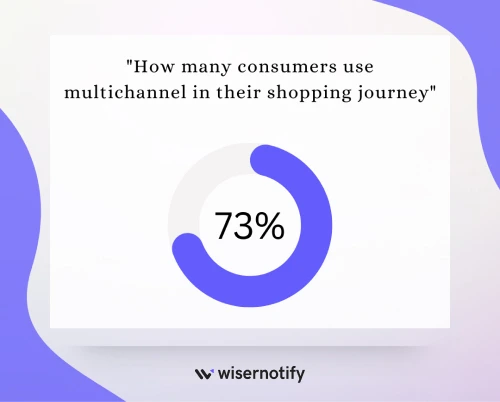
According to research by Wiser Notify, 73% of all consumers use multiple channels to research before making a purchase, making an omnichannel strategy for scaling ecommerce execution crucial in today’s world.
Source: Wisernotify
D2C brands experience unique challenges related to consistent execution across different channels, synchronising pricing, accurately signalling inventory levels, and consolidating customer data, all requiring precise execution. An omnichannel strategy without operational efficiency in execution can lead to fragmented experiences eroding both customer trust and conversion.
However, omnichannel execution only works when the customer journey is designed efficiently in an end-to-end funnel, using systems that sustain revenue.
Read more: The Digital Marketing Funnel Nobody Talks About: From Traffic to Repeat Sales
In-house vs. Ecommerce Agency Execution: Why In-House Ecommerce Teams Struggle
Talent Gaps and Overloaded Ecommerce Roles:
While theoretically having an in-house team offers control and context, most ecommerce teams face issues with thinly stretched resources. Expecting one ecommerce team member to act as performance marketing manager, UX designer, automation, analytics, marketplace execution, and conversion rate optimisation specialist far exceeds reasonable expectations.
Relying solely on individual digital marketing specialists, user experience designers, or performance marketing managers to execute their duties independently can create executional blind spots within an overall digital marketing ecosystem. Each of these roles focuses on its own area of optimisation, making the role of ecommerce specialists in execution vital for sustainable scaling.
Execution Bottlenecks and Slow Ecommerce Iteration:
Execution can slow down because of internal dependencies, such as delayed creative approvals, analytics waiting for engineering, and bandwidth optimisation. When there is a bottleneck in any of those processes, operational efficiency and time-to-market are affected.
In the digital commerce ecosystem, where the testing velocity correlates closely with sales growth, slow execution can be detrimental to the longevity of a business as well as its financial performance.
Founders Pulled Into Day-to-Day Ecommerce Execution:
When execution stalls, ecommerce brand founders have to jump in. They no longer have the time and energy to innovate their product or create new partnerships because they are constantly fixing problems that arise from executing an ecommerce business.
The result of constantly switching between tasks is that decisions are made in a rush, systems are only partly finished, and ecommerce growth becomes fragile, not cumulative. Many teams try to fix these execution gaps with discounts or ads; however, these are temporary fixes and can’t work as the business scales. This makes the role of ecommerce specialists even more relevant.
Read more: Ecommerce Challenges That Can’t Be Fixed with Ads or Discounts
The Rise of Specialist Ecommerce Execution Partners:
What Specialist Ecommerce Execution Agencies Actually Do for Brands?
Specialist ecommerce execution agencies help brands implement ecommerce solutions by identifying obstacles and developing solutions to eliminate them. These agencies operate quite differently from strategy-only agencies and freelancers; their sole objective is to create repetitive success for clients’ businesses.
In addition, these ecommerce implementation partners systematically put together solutions from multiple channels into one ecommerce platform, validate and verify that the integration works across all ecommerce channels. The basic difference between a specialist ecommerce execution agency and a strategy-based agency is the order of operations and what each agency does to ensure success for its clients.
The Specialist Ecommerce Execution Agency Model Explained:
The specialist agency model relies on targeted teams, who provide external execution while still allowing brands to maintain full strategic control. Agency Account Managers are responsible for ensuring accountability, timelines, and cross-functional alignment for each client.
The specialist agency model allows brands to operate with great acceleration. Brands use their own internal resources for strategy; however, execution through specialist agencies is done with ready resources instead of expanding internal team headcount. Partners like Nethority operate on this model to provide ecommerce execution support.
Scaling Ecommerce Execution Without Team Bloat:
Data-Driven Ecommerce Execution as a Core Advantage:
Rather than relying solely on intuition, data-driven ecommerce execution significantly improves the quality of execution. By integrating operational data using tools such as conversion optimisation, CRM, and marketplace management, ecommerce specialists create execution systems that can guide client decisions.
Source: McKinsey
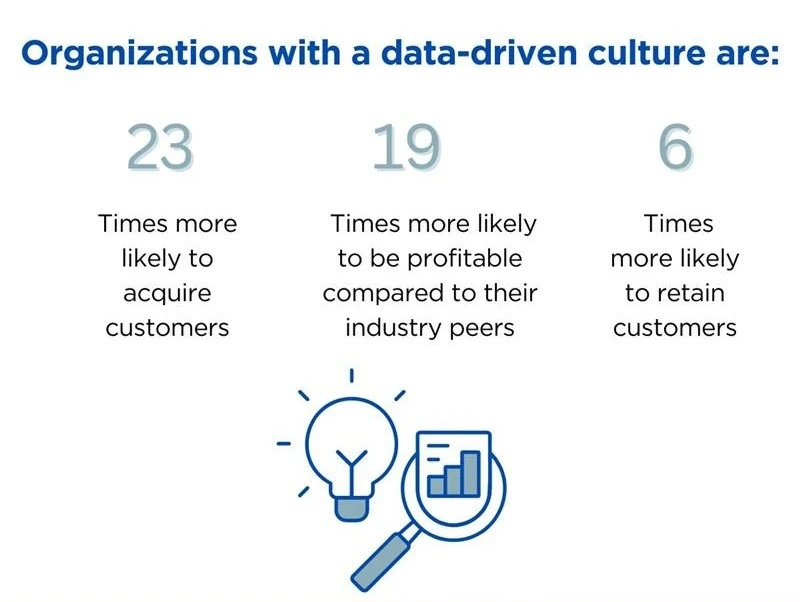
According to a McKinsey report, organisations with data-driven practices are 23x more likely to acquire customers, and are 19x more likely to be profitable. They are also 6x more likely to retain their existing customers. Brand execution within a specialist ecommerce execution agency model is reflected by leveraging analysis that results from patterns, not assumptions, that improve execution.
When Specialist Ecommerce Execution Partners Make the Most Sense?
Ecommerce Growth, Complexity, and Transition Phases:
Ecommerce implementation partners are the most effective at inflection points. When the ecommerce company is in a high-growth phase, replatforming, expanding internationally, or moving into omnichannel processes, they will all add to the complexity of execution.
Source: Click Learn
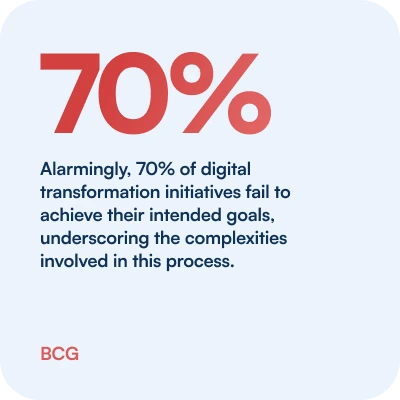
Digital transformation initiatives fail in 67% of cases because of complicated execution gaps, not flaws in strategy, according to a Boston Consulting Group report cited by Click Learn. Ecommerce Specialists help companies move through the process of digital transformation while maintaining revenue continuity, as their systems evolve.
Blending In-House Ecommerce Strategy With External Execution
The most effective model for ecommerce is a hybrid model. Internal teams retain responsibility for directing the ecommerce strategy, brand voice, and long-term vision while external execution partners take on the majority of execution responsibility. Clear collaboration between ecommerce specialists and executives can ensure alignment and eliminate friction.
How to Choose the Right Ecommerce Execution Partner?
Signals of a Strong Ecommerce Execution-First Agency:
Execution-first agencies like Nethority always demonstrate success through results, not just through the presentation of ideas. They have an in-depth CRO, performance marketing, UX, analytics, and automation, as well as have strong operational processes in place versus just presentations.
Avoiding Common Ecommerce Outsourcing Pitfalls:
The scope of the project, service level agreements, and accountability for the project must be clearly defined. When going for ecommerce execution outsourcing, projects that have clearly defined accountability deliver higher ROI than partnerships without structured processes. Accountability and measurable outcomes are both essential for executing sustainably.
Conclusion: Ecommerce Specialist Partnerships Are a Competitive Advantage
As the digital commerce ecosystem evolves, the role of ecommerce execution agencies rises as well. A well-formulated strategy could be a good roadmap to follow, but execution is what gets you there. It defines who sustains in the market with compounding growth. Such ecommerce consultants are becoming integral.
For D2C brands focusing on scaling execution, partnerships with ecommerce specialists play a key role. Execution-led partnerships like Nethority can help brands move faster in the digital landscape, achieve operational efficiency, and ensure scalability.
FAQs:
Ecommerce execution agencies take strategic plans and transform them into systematic plans with processes using multiple marketing channels, CRO, analytics data, and operational processes to provide consistent and measurable results.
The ecommerce execution and operations process consists of implementing systems, putting together teams and tools for optimal performance, and continually improving the workflows needed to support scalable online growth.
Ecommerce execution includes platform management, paid acquisition, conversion tracking, analytics, CRM workflows, marketplace operations, and continuing to optimise performance across multiple channels.
No. Specialist ecommerce execution partners are designed to supplement your in-house team with their execution capabilities and depth at a scale, while internal teams develop the overall direction and strategy for their brand.
When choosing an ecommerce execution agency, brands should look for proven execution experience, cross-functional areas of expertise, well-defined service level agreements (SLAs), strong reporting practices, accountability, and scalability.