
Team as a Service vs Outsourcing: Understanding the Key Differences
26th June 2025 / in SEO / by Ruturaj Kohok
- Reading time: 11 mins 07 Sec
Struggling to find skilled professionals for your business? We totally get it; you’re definitely not alone in this challenge!
Here’s where it gets interesting: team as a service vs. outsourcing have emerged as two popular options, but most business owners get confused between these two models.
We understand the confusion that surrounds these approaches.
While they might look similar at first glance, team as a service solutions offer some pretty distinct advantages compared to traditional outsourcing arrangements.
And with all the advancements in technology and globalisation happening around us, companies now have access to a global talent pool like never before!
This means you can scale operations and tap into specialised expertise without those hefty overhead costs of hiring full-time staff.
Check this out:
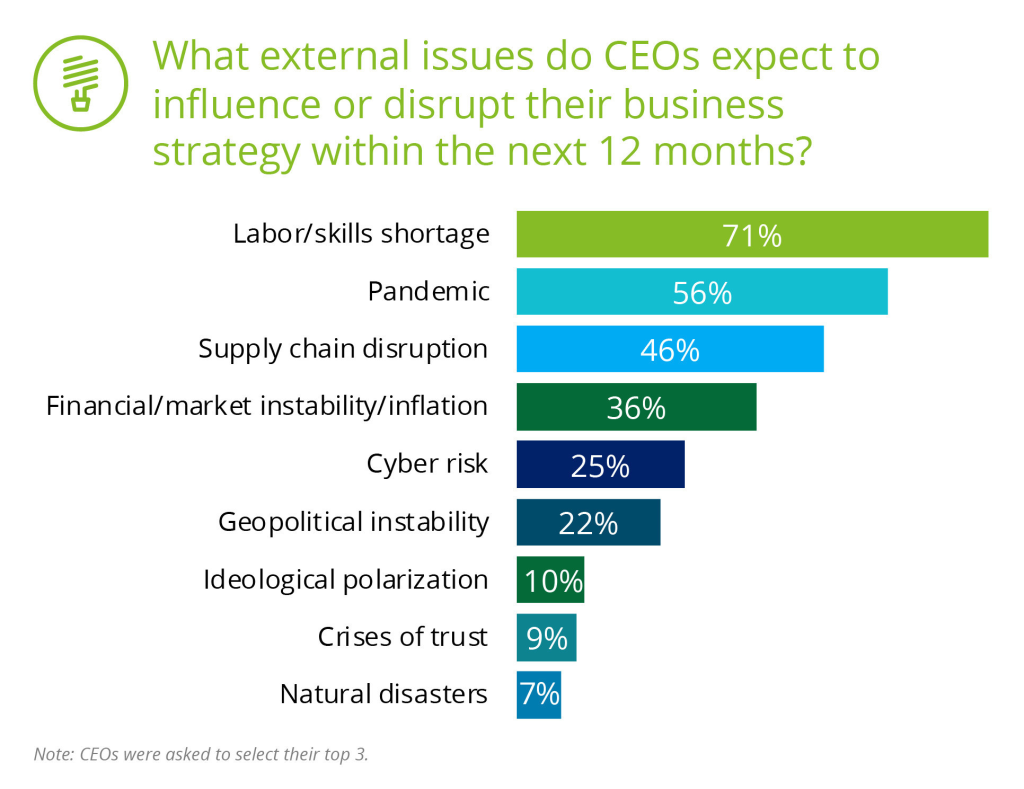
Source: PR Newswire
71% of CEOs cite global labour and skills shortage as their top external challenge to their business strategy. That’s a HUGE number, and it explains why so many organisations are scrambling to explore alternative workforce solutions.
Such a shortage can be easily tackled by a team as a service or outsourcing models, but which one?
We’ll break down the key differences between these two approaches and help you figure out which one actually aligns with your business needs.
Whether you’re looking to extend resources for targeting new markets or free up your employees to focus on more complex work, understanding these models is SUPER important for making smart decisions in today’s competitive landscape.
Let’s get into it!
Understanding the Core Concepts: TaaS vs. Outsourcing
When businesses need to expand capabilities quickly, they often find themselves choosing between two distinct models: Team as a Service vs. outsourcing.
We understand how important it is to grasp the fundamental differences between these approaches; after all, making strategic decisions about your workforce can make or break your business growth.
What is outsourcing?
Here’s what you need to know about outsourcing:
It’s a business practice where companies hire external providers to perform specific services or create goods that were traditionally handled in-house.
Companies typically outsource for three main reasons: to cut labour costs, focus on core business functions, and access specialised skills.
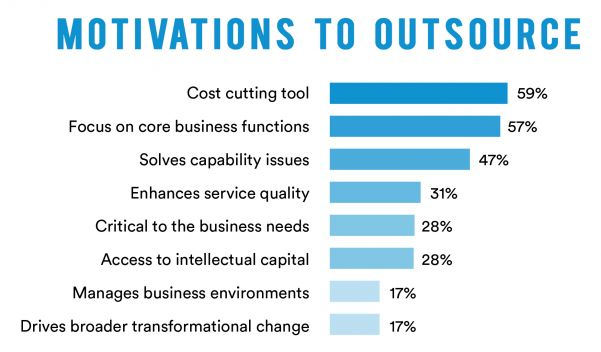
Source: Offshore Business Processing
Did you know? Research indicates that 59% of businesses view cost optimisation as their primary motivation for outsourcing, followed by 57% wanting to focus on their core business.
What is a professional Team as a Service?
Team as a Service (TaaS) represents a more integrated approach to external resourcing, and here’s why that matters:
Unlike traditional outsourcing, where individual tasks are delegated, TaaS provides a cohesive team of professionals already accustomed to working together.
These teams bring specialised skill sets that can include developers, UI/UX designers, QA testers, database engineers, and project managers.
Team as a Service solutions operate on the principle of dedicated teams assigned exclusively to a client.
What does this mean for you? Businesses gain access to specialised knowledge without making substantial financial commitments required for full-time employees.
This approach is particularly valuable for companies needing to scale their workforce quickly in response to changing project demands.
How have they evolved in the digital age?
Team as a Service vs. outsourcing have undergone significant evolution in our connected world: let’s check out how this happened.
Initially, outsourcing focused primarily on manufacturing and basic business processes. However, the digital transformation brought about by high-speed internet, cloud computing, and advanced collaboration tools has enabled more diverse outsourcing strategies.
Meanwhile, several factors contributed to professional Team as a Service becoming a viable model. The advancement in technology, especially cloud-based solutions and project management software, has made it easier for distributed teams to work together effectively.
Additionally, the growing acceptance of freelance and contractual work in the economy has supported the rise of TaaS as a flexible workforce solution.
This trend underscores the continuing shift toward flexible business models that provide access to specialised talent on demand.
Comparing the Two Models: Key Differences
Now that we’ve covered the basics, let’s dig into what actually sets these two approaches apart.
While team as a service vs. outsourcing might look similar on the surface, they differ BIG TIME in how they integrate, scale, and deliver value to businesses.
Understanding these distinctions is exactly what you need to make smart decisions about your external workforce strategy.
Team integration and control:
Here’s where the team as a service vs. outsourcing debate gets really interesting: it all comes down to control!
TaaS takes a much more integrated approach, letting companies extend their in-house capabilities with external experts who actually operate within their existing workflows.
Think about it: unlike traditional outsourcing, where you basically hand over control, TaaS empowers you to maintain oversight throughout the entire project.
A professional team as a service seamlessly blends into your company’s structure, using your preferred tools like Slack, Jira, or GitHub.
Scalability and flexibility:
Team as a service solutions offer something that traditional outsourcing simply can’t match: unparalleled scalability.
This model allows businesses to ramp up or down based on demand without those annoying delays that come with conventional recruitment.
Why such massive growth in TaaS? It’s all about adaptability.
Instead of being stuck with fixed team sizes, companies can adjust resources to match project demands, ensuring optimal utilisation while eliminating those resource management headaches we all know too well.
Cost structure and resource allocation:
Let’s talk about money, because that’s what really matters, right?
Team as a service solutions completely change the game by transforming fixed IT costs into variable expenses.
The cost efficiency comes from several key areas:
- A pay-as-you-go model that aligns perfectly with business cycles
- Elimination of recruitment fees and infrastructure costs
- No overhead for HR, benefits, or training expenses
- Ability to redirect internal resources toward core activities
Speed of deployment:
Here’s the real kicker: TaaS absolutely crushes traditional approaches when it comes to speed.
Since a professional Team as a Service comes pre-formed with established synergy, they eliminate all those delays caused by onboarding or team-building efforts.
This pre-established cohesion doesn’t just improve project initiation, but it also supports quick deployment cycles and enhances precision across the board.
For businesses facing time constraints, TaaS can deploy specialised teams within weeks, whereas traditional hiring might take months for the same capabilities.
We’re talking about a massive time advantage that can make or break project success!
Choosing the Right Model for Your Business:
Now that we’ve covered the key differences, let’s talk about the big question: which model actually works best for YOUR business?
Selecting between team as a service vs. outsourcing isn’t a one-size-fits-all situation. Your decision should be driven by several key factors that are specific to your organisation’s needs.
Project complexity and duration:
The complexity and timeframe of your project play a HUGE role in determining which model works best.
Here’s what we’ve noticed: for well-defined projects with clear requirements, traditional outsourcing often proves ideal.
But here’s where it gets interesting: if your project is complex with evolving requirements, a professional team as a service offers better adaptability.
And if you’re dealing with short-term projects that have tight deadlines? TaaS can deploy specialised teams within weeks rather than months.
That’s a game-changer when you’re racing against time!
Required skill sets and availability:
When you’re evaluating specialised expertise needs, ask yourself this: Does your project require deep domain knowledge?
Team as a Service solutions typically offer access to diverse professionals with varied skill sets.
This becomes especially valuable when you need specialised testing like IoT testing or compliance testing (HIPAA).
But here’s something to consider: for projects requiring in-depth knowledge of legacy systems or industry-specific applications, in-house teams might be preferable.
Budget and operational control:
Let’s talk about money and control: two things that matter A LOT to business owners.
A professional Team as a Service transforms fixed costs into variable expenses through a pay-as-you-go model. This approach eliminates expenses related to recruitment, infrastructure, and training.
If maintaining full control over the process is essential for your business, the dedicated team model proves more suitable.
Long-term vs short-term needs:
This is where things get really interesting…
For temporary workload surges or periodic demands, staff augmentation provides flexibility without long-term commitments.
As projects become longer and more complex, the advantages of working with a remote team increase.
So here’s the bottom line: if your goal is building a robust internal team that evolves with your company, in-house development might be better.
But if your focus remains on cost-effectiveness and flexibility, team as a service solutions present a more suitable option.
Before making your decision, take time to thoroughly evaluate your project requirements, technical expertise needs, and available budget.
This evaluation will help you determine which approach aligns best with your business objectives.
Future Outlook: The Rise of Team as a Service Solutions
The future of workforce solutions? It’s changing FAST, and professional Team as a Service (TaaS) is quickly becoming the star player in our digital world.
We all know businesses are scrambling to stay competitive these days, and TaaS is offering a pretty promising alternative to those traditional outsourcing methods we’ve been relying on.
Trends in digital transformation:
Digital transformation is reshaping how businesses operate, creating both challenges and opportunities left and right.
And guess what’s happening because of this? TaaS is becoming absolutely essential for companies dealing with talent shortages while needing specialised skills.
But wait, there’s more! The integration of artificial intelligence and machine learning is fundamentally changing the team as a service vs. outsourcing capabilities.
These technologies enable more precise and efficient operations, allowing companies to perform complex tasks with way greater accuracy than before.
At the same time, security testing is growing in importance as cyber threats keep increasing. This is pushing TaaS providers to develop some seriously advanced solutions that address these emerging challenges.
Why is TaaS gaining popularity?
The popularity of TaaS stems from several factors that just make sense:
- Eliminates geographical barriers, enabling access to global expertise
- Transforms fixed IT costs into variable expenses for better resource allocation
- Provides unparalleled scalability to match fluctuating market demands
- Reduces costs while improving operational efficiency
Because of labour or skill shortage, a professional ‘team as a service’ has become an attractive solution that actually addresses this pain point.
How are businesses adapting?
Forward-thinking organisations aren’t just trying TaaS as a quick fix; they’re embracing it as a strategic advantage for the long haul.
They’re integrating these dedicated teams into their core operations while maintaining control over projects and workflows. Smart move!
What’s really interesting is how businesses are now forming specialised teams on demand whenever project requirements change, cutting those administrative headaches and hiring costs we all dread.
This approach enables companies to maintain control while getting access to external talent for specific needs.
For many organisations, the focus has shifted from simply adopting technology to creating a data-driven organisation.
This requires shifts in mindset, working practices, and culture; all areas where a professional team as a service can provide valuable expertise without those pesky long-term commitments.
Ps. The companies that adapt quickest to these changes are the ones that’ll stay ahead of the competition!
Final thoughts - Choosing the right model: Team as a service vs. outsourcing
To sum it up, both approaches offer solid solutions for businesses struggling with talent acquisition in today’s competitive market.
But TaaS definitely stands out as a more integrated, flexible approach that gives you greater control while keeping those cost benefits you want from external workforce solutions.
For complex projects with evolving requirements, TaaS offers better adaptability and integration with your existing systems.
On the flip side, traditional outsourcing might work better for well-defined projects with clear endpoints and deliverables.
While both models will continue to coexist, team as a service solutions provide the agility modern businesses need to thrive in rapidly changing markets.
Focus on finding partners who understand your business objectives and can deliver consistent value, regardless of the model you choose.
Need help deciding which approach works best for your business?
We’re here to help you make the right choice!
FAQs:
Team as a Service in digital marketing is a flexible staffing model that provides dedicated, scalable teams for specific projects. Unlike traditional outsourcing, TaaS offers more integrated teams that work within your company’s structure, using your preferred tools and maintaining greater control over the project.
TaaS transforms fixed costs into variable expenses, offering more efficient resource allocation. Organisations adopting TaaS can experience better cost savings compared to traditional in-house setups, eliminating recruitment fees, infrastructure costs, and overhead for HR and training.
The advantages of TaaS in digital marketing include unparalleled scalability, allowing businesses to adjust resources based on project demands quickly. It also accelerates project timelines through faster deployment, with specialised teams available within weeks, compared to months for traditional hiring processes.
The choice between TaaS or traditional digital marketing outsourcing depends on factors such as project complexity, duration, required skill sets, budget, and operational control needs. TaaS is often better for complex projects with evolving requirements, while traditional outsourcing may suit well-defined projects with clear endpoints.
TaaS in digital marketing is gaining popularity rapidly thanks to its flexible talent-based model. Its growth is driven by the need for specialised skills, cost efficiency, and the ability to adapt quickly to changing market demands in the digital age.