
Why Every E-commerce Brand Needs a Mobile-First Strategy in 2025

29th August 2025 / in Ecommerce / by Ruturaj Kohok
Mobile commerce continues to change the digital world with unprecedented momentum.
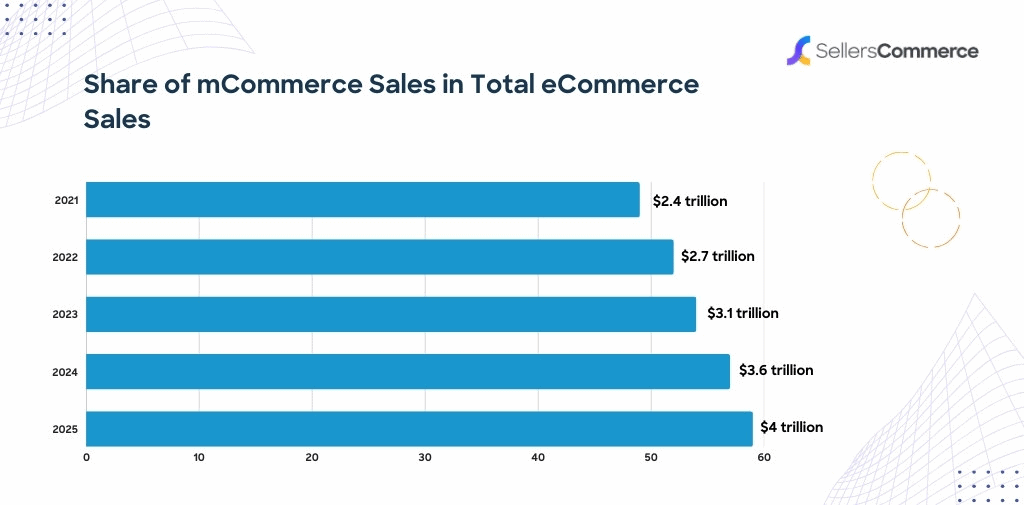
Market projections indicate it will represent 59% of all online retail sales worldwide by 2025, reaching approximately $4.0 trillion in volume.
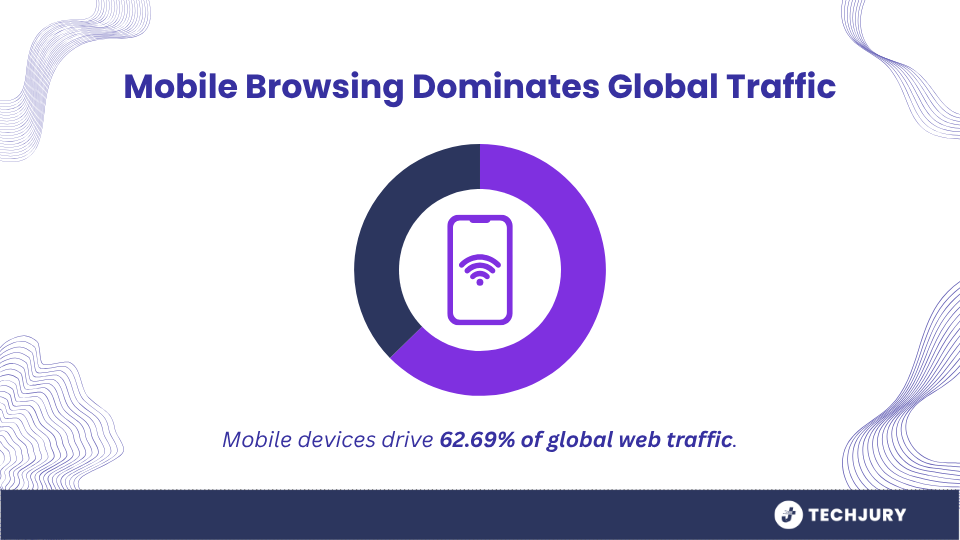
Business owners cannot overlook this significant change in consumer behaviour, particularly since mobile traffic represents over 60% of global web usage.
Source: Sellers Commerce
A mobile-first strategy has become crucial for e-commerce websites to maintain competitiveness. Mobile sessions dominate user interactions across multiple sectors – e-commerce, lifestyle, travel, and local services see 70-80% of their traffic from mobile devices.
Google’s current ranking system relies on mobile-first indexing, which means your site’s mobile version determines its search position.
Your business needs to adapt to this ever-changing digital world. This blog examines mobile commerce’s impact on e-commerce, common obstacles mobile shoppers encounter, and proven strategies to enhance your mobile experience.
A mobile-first strategy represents more than a passing trend; it offers your business a vital competitive edge for the future.
How has mobile commerce changed the e-commerce landscape in 2025?
Smartphones have radically altered how people shop online. Mobile devices generate higher traffic than desktops.
This dramatic change has pushed businesses to rebuild their digital strategy from scratch.
Mobile vs desktop traffic and sales share:
Numbers paint a clear picture of mobile’s dominance. Mobile commerce now owns 73% of the global e-commerce market, up from 59% in 2017.
Source: Wiser Notify
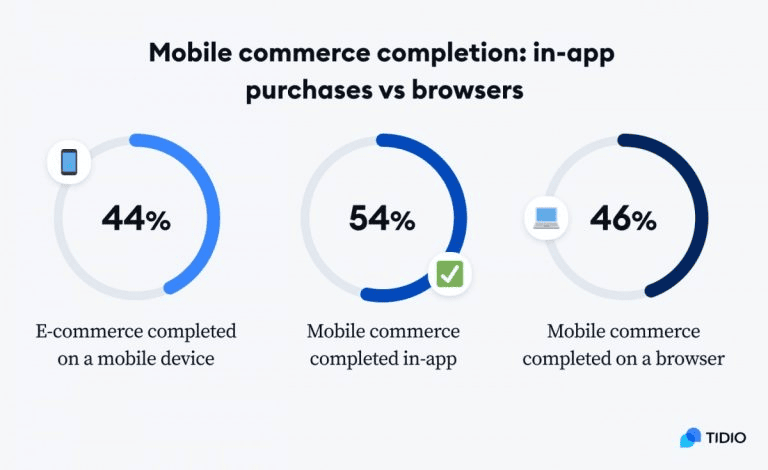
Recent data shows 44% of e-commerce purchases were made through a mobile device, with 54% mobile commerce completed in-app, and 46% on a browser.
Mobile devices beat desktops in all key metrics:
- Conversion Rate: 3.7% for mobile apps vs 1.8% for desktop
- Average Order Value: GBP 97.68 on mobile vs GBP 85.77 on desktop
- Cart Abandonment: 68% on mobile vs 79% on desktop
- Session Duration: 4.9 minutes on mobile vs 3.2 minutes on desktop
Types of mobile commerce dominating the market:
Mobile commerce shapes the market in several distinct ways.
Mobile apps lead the pack – users spent over 41.9 billion hours on shopping apps in 2024. About 60% of shoppers prefer these apps because they’re easy to use and navigate smoothly.
Social commerce has grown into a powerhouse. About 62% of users have bought products they found on social media.
Platforms like Instagram Shopping and Facebook Marketplace let people browse and buy without leaving their favourite social networks.
Mobile wallets have transformed how we pay, making up 54-60% of global digital transactions. Asian-Pacific markets show the strongest adoption rates.
Why is mobile now the default shopping channel?
Source: Gauss
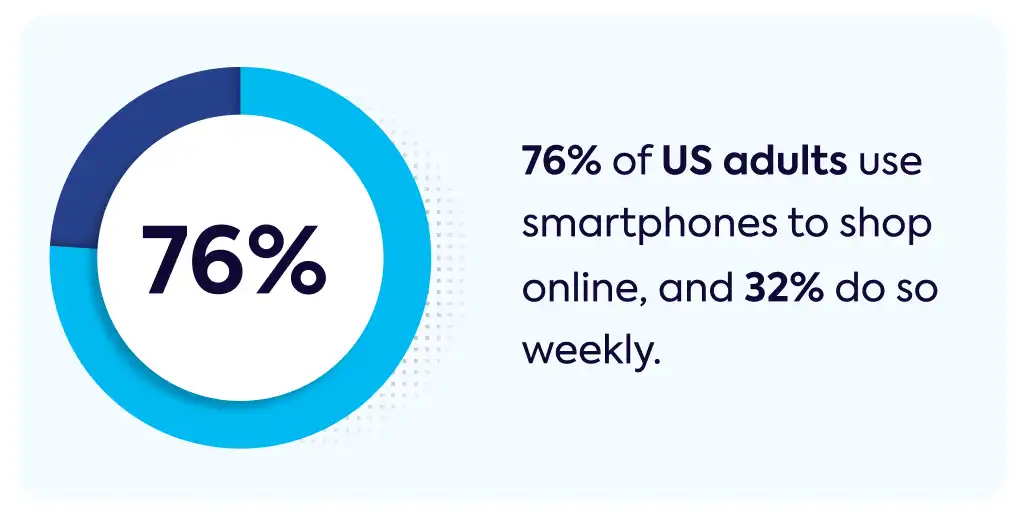
The implementation of a mobile-first strategy fits perfectly with how people live today. American adults have embraced this change – 76% now buy things through their smartphones.
Today’s market runs on speed. Services like Apple Pay and Google Pay, with their biometric authentication, saw 41% more users than last year.
Push notifications bring back 91% more customers compared to emails, which bring in just 22%.
Source: Sellers Commerce
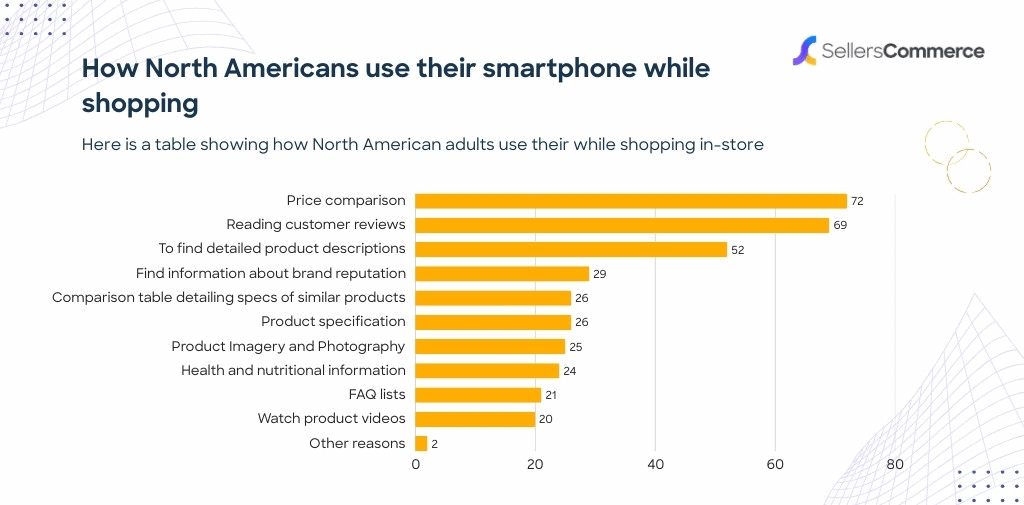
Mobile creates a bridge between online and physical shopping. About 72% of North American shoppers use their phones to compare prices while in stores.
This smooth connection between channels makes buying easy, no matter where customers complete their purchase.
What are the biggest challenges mobile users face on e-commerce websites?
Mobile commerce keeps growing rapidly, yet online retailers struggle to give shoppers a good experience on smaller screens. Let’s get into the biggest problems shoppers face while buying on their smartphones.
Slow load times and poor performance:
Mobile shoppers need speed more than anything else. Check this out:
Source: Chadwick Design Ltd
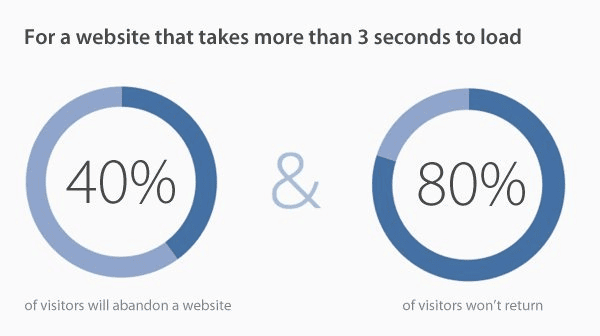
About 40% of users abandon the online commerce sites that take more than 3 seconds to load. These delays hurt sales, as every 100ms of extra load time can drop conversions by 7%.
Google’s data reveals bounce rates jump 32% with 1-3 second loads and reach 90% at 5 seconds.
Without doubt, mobile optimisation should top the priority list.
Cluttered layouts and hard-to-tap elements:
Mobile shoppers want simple interfaces but often get lost in complicated ones. Users struggle because e-commerce websites don’t highlight their current location in the main navigation.
This makes it hard to find their way through product categories. It also doesn’t help that many mobile sites show tiny product thumbnails in search results. Users waste time clicking product pages just to compare items.
Complicated checkout processes:
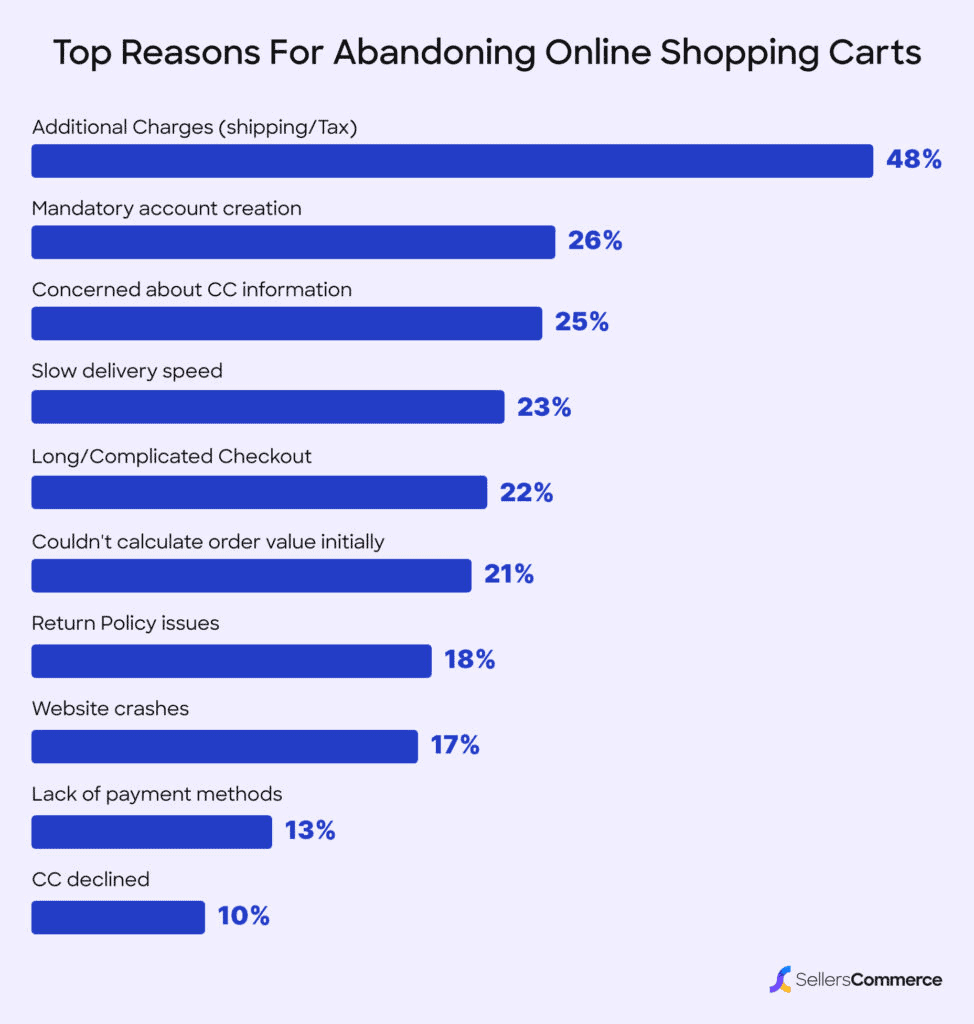
In mobile commerce, cart abandonment happens most at checkout, with 18% of users giving up because the process is too complex.
There are many reasons why users abandon their shopping carts: they hate creating accounts before buying, especially on mobile, where typing passwords becomes frustrating. Small keyboards make long forms with extra fields a significant barrier.
Lack of mobile-friendly payment options:
Payment choices can make or break a sale. 40% of online shoppers leave their carts because of limited payment options.
Digital wallets like Apple Pay and Google Pay are a vital part of shopping on online commerce sites. These tools save users from typing card details on tiny screens.
One-tap payments are the quickest way to boost checkout success rates.
How can brands optimise their mobile experience for better results?
Successful brands know that mobile optimisation is crucial for survival. The number of people who use smartphones to access the internet has increased significantly, making a mobile-first strategy a critical business priority.
Use mobile-first themes and frameworks:
The foundation for success starts with responsive themes built specifically for mobile commerce.
Smart brands design everything for mobile screens from the start instead of reducing desktop content to fit phones.
Themes like Astra and OceanWP provide lightweight frameworks that help your website load quickly and improve user experience and search engine optimisation.
Streamline navigation and product discovery:
Mobile devices account for a significant portion of online shopping, so your navigation must work well on smaller screens.
A single-column layout with vertical stacking helps users scroll naturally through content. Users need touch points of at least 1cm × 1cm to tap accurately on interactive elements.
All these details can be taken into account by a mobile app development company to help you ensure efficient navigation and product discovery.
Enable fast, secure mobile checkouts:
Source: Sellers Commerce
Checkout optimisation directly affects sales, as 22% of users abandon their carts due to complicated checkout processes.
To ensure efficient mobile commerce, guest checkout options are essential, since 26% of shoppers leave when forced to create accounts.
Digital wallets like Apple Pay or Shop Pay have increased conversion rates by 22.3% on average.
Use push notifications and personalisation:


Source: Bloomreach
It is important to get the services of a professional mobile app development company.
This is because app push notifications get remarkable engagement with a 90% open rate. App users who receive notifications show 190% higher retention rates than those who don’t.
Partner with a digital marketing company for mobile-first campaigns:
Hiring the services of a professional digital marketing company can provide expert guidance in mobile-first design principles when your mobile strategy needs improvement.
Through deep strategy, design, and execution expertise, your campaigns can be positioned well to provide richer mobile experiences, including fast-loading pages, flexible visuals, and enticing content.
Outside of optimisation, partnering with a digital marketing company also allows businesses to tap into data-driven insights, precise advertising, and mobile-focused SEO to garner conversions and brand awareness.
You can stay one step ahead of the competition, capture their interests, and strengthen customer relationships through personalised mobile-first marketing campaigns.
Why is a mobile-first strategy a long-term competitive advantage for e-commerce brands?
Mobile-first approach brings benefits that are nowhere near just short-term gains for e-commerce brands.
The strategy builds lasting competitive advantages that reshape the scene in many business areas.
Improved customer retention and loyalty:
Mobile-first experiences boost customer loyalty directly.
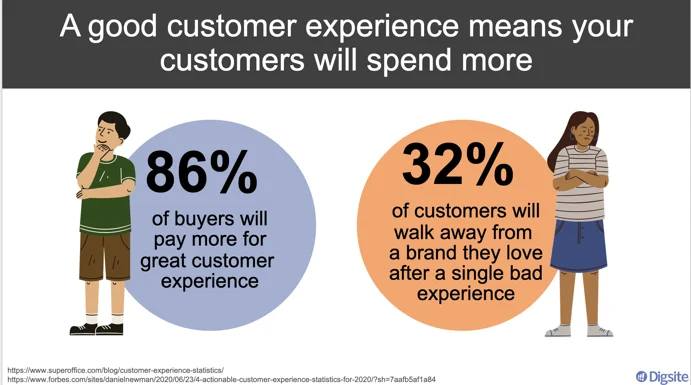
Research shows 86% of buyers will pay more for excellent customer experiences, while 32% will walk away from a brand they love after just one bad experience.
On top of that, mobile apps increase customer lifetime value by 35%, making the implementation of the services of a mobile app development company extremely critical.
Source: Digisite
This happens because mobile creates constant touchpoints that fill engagement “dead zones” between purchases.
Individual-specific experiences through mobile improve satisfaction, and these casual shoppers become brand supporters who return without prompting.
Higher conversion rates and lower bounce rates:
Numbers paint a clear picture of mobile conversion power. Mobile apps deliver 3X higher conversion rates than mobile websites and 5X higher than desktop experiences.
Performance is a vital factor as users abandon sites that load slowly. This shows how optimised mobile experiences reshape financial results.
Better alignment with user behaviour:
Mobile-first strategies match today’s shopping patterns.
Source: TechJury
Right now, 92.69% of global web traffic comes from mobile devices, and 98% of consumers want to connect with businesses through their phones.
Users check their devices about 144 times daily, which creates many chances to connect. People prefer smartphone shopping because it’s convenient.
Future-proofing against tech and market shifts
A mobile-first strategy guarantees long-term success. Mobile channels will drive 62% of all e-commerce purchases by 2027, showing the ongoing trend.
Voice commerce merges naturally with mobile-first frameworks, and monthly searches will reach 2 billion. Businesses that use mobile-first design stay relevant as technology keeps changing rapidly.
Final thoughts: Shaping the future of online shopping through mobile commerce
Mobile commerce has altered the e-commerce map. A mobile-first strategy is now essential for brands to thrive in 2025 and beyond.
Brands that prioritise exceptional mobile experiences now will definitely earn rewards through increased sales, stronger customer relationships, and lasting competitive advantages in tomorrow’s mobile-centric retail landscape.
Need help with a mobile-first strategy? Get in touch with us today.
FAQs:
Mobile-first strategy is essential because mobile devices now generate a significant portion of e-commerce traffic and deliver higher conversion rates. With consumers increasingly preferring smartphones for shopping, brands that optimise for mobile gain a competitive advantage in customer engagement and sales.
The biggest challenges include slow loading times, cluttered layouts that are difficult to navigate on small screens, complicated checkout processes, and a lack of mobile-friendly payment options, causing high cart abandonment rates and lost sales opportunities.
Brands can enhance mobile experiences by using mobile-first themes, streamlining navigation for easy product discovery, enabling fast and secure checkouts with digital wallet options, leveraging push notifications for personalised engagement, and partnering with digital marketing experts for mobile-optimised campaigns.
A mobile-first approach leads to improved customer retention and loyalty, higher conversion rates, lower bounce rates, and better alignment with user behaviour. It also future-proofs businesses against technological shifts, ensuring they remain competitive in the rapidly evolving e-commerce landscape.
Mobile commerce has made shopping more convenient and accessible, with consumers now able to make purchases anytime, anywhere. It has also led to increased use of mobile apps for shopping, growth in social commerce, and a preference for digital payment methods.