The Visibility Puzzle: SEO, PPC, or AI-Driven Marketing

24th December 2025 / in Ecommerce, SEO / by Ruturaj Kohok
- Reading time: 11 mins 05 Sec
In the past, search visibility was a direct path: create a web page and get links to help increase its visibility in the search engines. In present times, this process is more complicated, with the introduction of ads taking precedence over organic Google searchability, and AI solutions giving users access to information based on their searches without them actually having to click on anything, thus making it nearly impossible for a website or business to be seen in search results without a combination of search engine optimisation, pay-per-click advertising, and an understanding of how to utilise AI tools for better results.
Google searchability and the Google algorithm:
How does the Google Algorithm determine website ranking today?
The Google algorithm now is based on what the content on a web page offers users in terms of speed, trustworthiness, and quality, and not solely on keyword usage or repetition. In addition, optimising for search engine visibility now requires having a clear website structure, fast website speed, a credible author or writers, and the ability to fulfil the search query intention of the user.
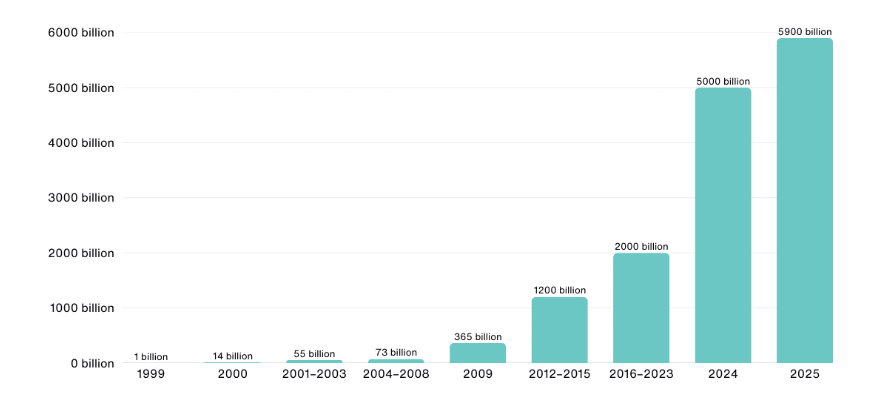
Source: Demand Sage
Google has processed about 5.9 trillion queries in 2025, most of which are zero-click searches. This is why SEO specialists and digital marketers are much more focused on semantic clarity than mere keyword integration. With the rise of AEO and GEO, ranking is no longer the primary target to increase your online visibility.
Why is website ranking only one part of discovery?
Web ranking still plays an important role in SEO; however, the majority of search queries are performed by users who do not click on the actual listing found on the results pages. Furthermore, the increase in users performing zero-click queries is a reason for content strategists and marketing analysts to shift their focus to finding ways to become the best possible answer for their prospective customers, rather than simply ranking a website and waiting for visitors to click.
Voice search and the shift toward conversational queries:
With the rise of voice search technology, users are starting to move towards using complete sentences when searching for information as opposed to entering fragmented words. Websites that contain content formatted like a conversation will continue to yield better results on all types of AI-assisted searches and will therefore require SEO professionals to write content that allows for both formal and spoken ranking.
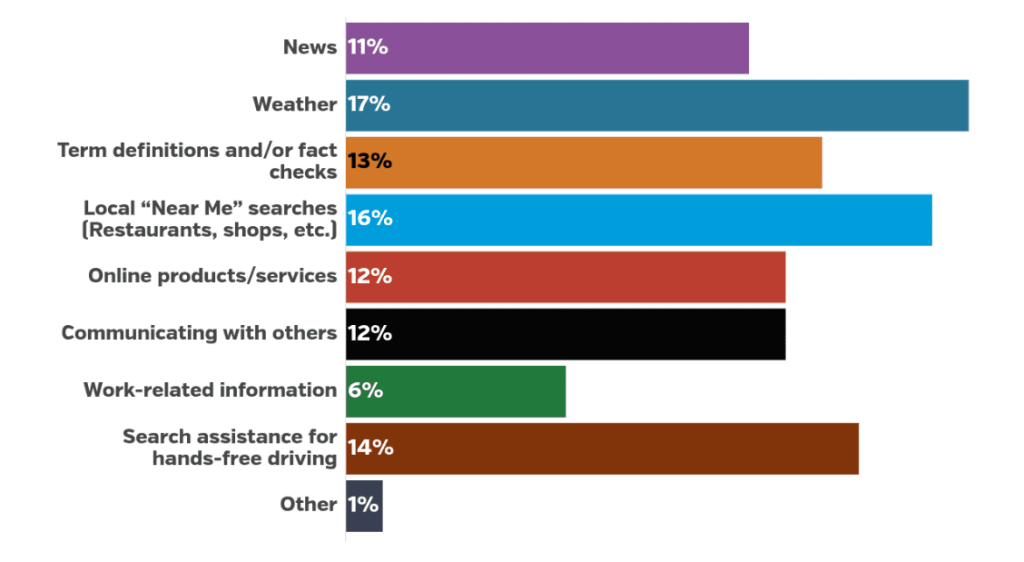
Source: Keywords Everywhere
People utilise voice searches for a variety of reasons: 13% use it to discover term definitions or fact checks, 12% to look online for products and services, 16% for local searches, and more. This makes optimising for conversational queries very critical in a modern SEO strategy.
Read more: The Rise of Voice Search 2.0: Optimising for Conversational Queries
Search Engine Optimisation as a Long-Term Visibility Engine:
How SEO builds sustainable website ranking over time?
SEO has a multiplying effect, which can result in a traffic source from visitors to your site for an extended time period after they visit it. Building topical depth on your website and linking pages within your website that are related to each other with internal links will assist search engines in estimating the relevance of your website, as well as each individual page on your site, therefore increasing the overall search engine website ranking over time. This is especially a good strategy for websites created on platforms such as WordPress or Shopify, as technical foundations and content depth directly influence scale.
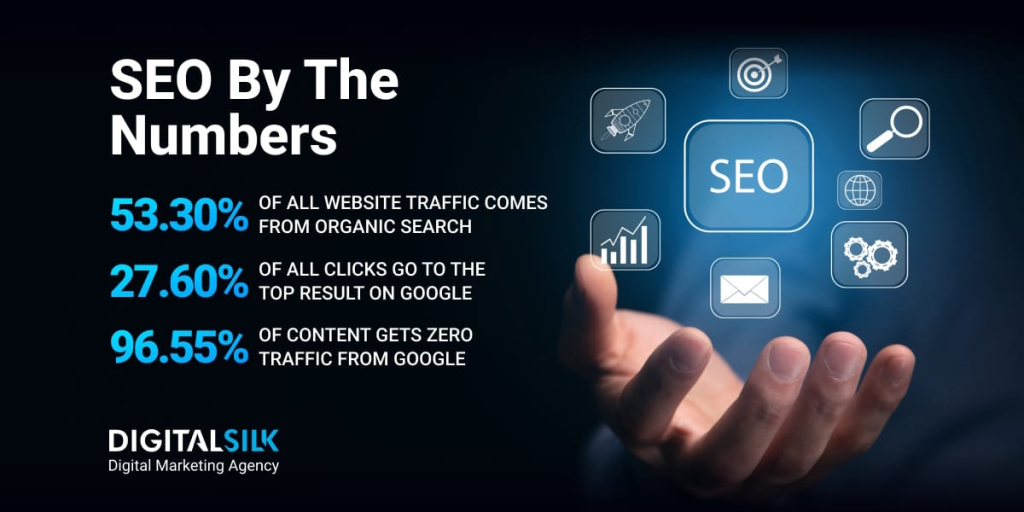
Source: Digital Silk
Check this out: 53.3% of all website traffic comes from organic search, 27.6% of all clicks direct to the top result on SERPs, and 96.55% of content gets zero traffic from Google. This just shows long-term search engine optimisation continues to hold digital growth strategies.
Optimising for search engines with structure and intent:
In today’s times, along with optimising for search engines, the use of semantic structure and intent is the primary focus of SEO. In order to maximise the performance of SEO, your website must be as comprehensive as possible to answer users who are conducting searches based on a core query and the “next questions” they have.
To do this, you must optimise your content by adding core queries, next questions, and creating entity pages to ensure they contain the most relevant information available about your topic. This semantic approach, combined with predictive planning, reduces your focus on keywords and builds it through context to ensure visibility despite the changing Google algorithm.
Read more: The End of Keywords? Semantic + Predictive SEO for 2026 and Beyond
Technical, content, and semantic SEO working together:
SEO success is created when the technical aspects of your website are aligned with quality content and relevant semantic content. The speed at which your website loads, its architecture, and the structure of your site determine where your website appears in the search results.
SEO tools such as Ahrefs, SEMrush, and Moz are used to monitor organic performance and identify gaps; however, strategising with technical, content, and semantic SEO still holds your performance together.
The depth and semantic richness of your content determine whether or not it is relevant to the search engine. When all three layers work together, SEO can withstand rather than react to the changes in the Google algorithm.
Pay-Per-Click Advertising for Immediate Google Searchability:
How Pay-Per-Click impacts Google searchability instantly?
With Pay-Per-Click, you will be able to see your brand in front of people who are searching for what you are providing immediately. This provides the opportunity to enter the marketplace for highly competitive search terms, which can take several months to get ranked for organically.
The speed of getting into these highly competitive search terms makes PPC an excellent solution for new product launches, seasonal demand, and testing of new products until organic visibility is established. Online platforms like Meta Ads Manager and LinkedIn Ads also allow PPC managers / paid media experts for audience testing, helping SEO prioritisation through deeper behavioural insights.
When does a PPC Strategy make more sense than SEO?
In most cases, a PPC strategy works better when you need fast results, making it the ideal option for short-term or limited-time campaigns for immediate results where time is critical. Additionally, the data that you obtain from PPC can provide insight into how users query, the specific messages that they respond to, and how users convert into customers.
By understanding how users behave on your website, you can develop organic content and have a solid strategy for growing your organic visibility via search engine optimisation.
Limitations of Pay-Per-Click for long-term website ranking:
Pay-per-click has many advantages in terms of speed; however, it also has many limitations. When the budget is exhausted or there is an increase in competition, the visibility of an advertiser will disappear. Because PPC doesn’t build long-term authority or rank for a website, it’s not a substitute for ongoing and continuous SEO efforts; it is intended to be used in combination with SEO to provide sustainable and consistent business growth.
AI-Driven Marketing and the New Rules of Search Discovery:
What does AI SEO mean for modern search engine optimisation?
At its core, AI SEO is aimed at proper formatting of the content of your website to be easily read by the generative software systems that summarise and recommend content. Ensure your content presents clarity, consistent facts, and structured data for high visibility. Brands that understand the importance of treating AI as a discovery vehicle rather than simply a shortcut for producing content will likely remain visible and relevant in the long run.
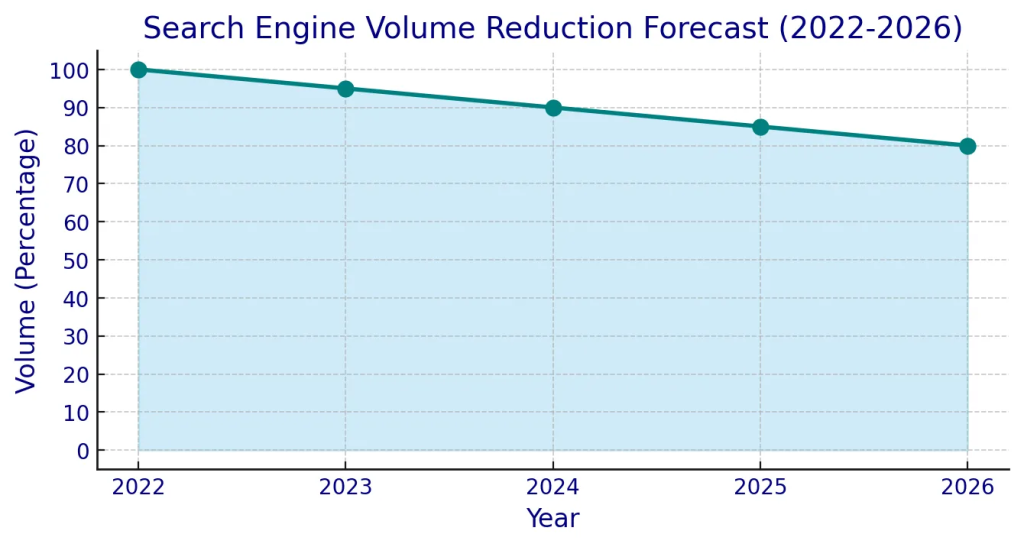
Source: Leads Leader
Google’s dominance is challenged with the advent of AI, as the search engine volume on Google is expected to reduce by 25% in 2026. This is why AI marketing engineers are also increasingly teaming up with SEO specialists to combine optimisation with generative discovery, to ensure visibility on both.
Read more: How AI-Driven SEO Strategies Are Transforming Sales for E-commerce Companies?
Optimising for AI Search, SGE, and Voice Assistants:
To optimise for AI search, voice assistants and SGE (Search Generative Experience), content optimisation must focus on answer-type content. When creating answer-centric content, key information should be displayed first on a webpage; additional descriptive context should be placed directly after.
This structure provides the clarity and context that AI systems require in order to produce an accurate summary of your website concisely, and provides voice assistant performance. As discovery becomes increasingly AI-assisted and AI-driven marketing tools like ChatGPT, Jasper AI, and HubSpot AI help speed up workflows, optimising for search engines will continue to converge with that of answer engines
Read more: Generative AI in E-commerce Marketing: Opportunities
How AI changes the way users discover brands online?
The way that we search for things has changed from actually exploring to having it presented to you by AI, which provides you with recommendations based on your previous online behaviour. More and more users are depending upon AI summaries, analyses, and recommended options from AI rather than having to look through multiple websites of brands to find information about them.
This makes AI SEO very important; the visibility of a brand on the internet relies upon how confident an AI system is regarding the information available about the brand. This has made it more important for companies to have a consistent, authoritative, and clear presence at all their digital touchpoints.
SEO vs PPC vs AI SEO: Which Visibility Strategy Wins?
Comparing cost, speed, and scalability across channels:
SEO is a channel which allows for scalability and compounding returns; however, it takes time to produce results. A PPC strategy produces results quickly and allows for more control, but is dependent upon continuous spending.
AI SEO allows brands to be visible within the emerging discovery environments, but must be built on a foundation of strong content and data. Each channel has a particular role in supporting the company; none can perform as effectively as the others if they operate in isolation.
Matching the right strategy to your business stage:
Companies that are in their early stages of development predominantly use PPC to establish traction, whereas more established businesses tend to derive more value from SEO by optimising for Google searchability.
With increased competition and the introduction of AI-based discovery, companies will find that AI SEO is critical for maintaining currency and relevance in the market. As the company evolves in terms of growth, resources and marketplace maturity, combinations or mixes will also change.
Along with the rise of multiple marketing channels, measuring their results has become increasingly important. Marketing analysts are increasingly relying on platforms like Google Analytics and Adobe Analytics to inform ROI measurement across SEO, PPC, and AI-driven marketing.
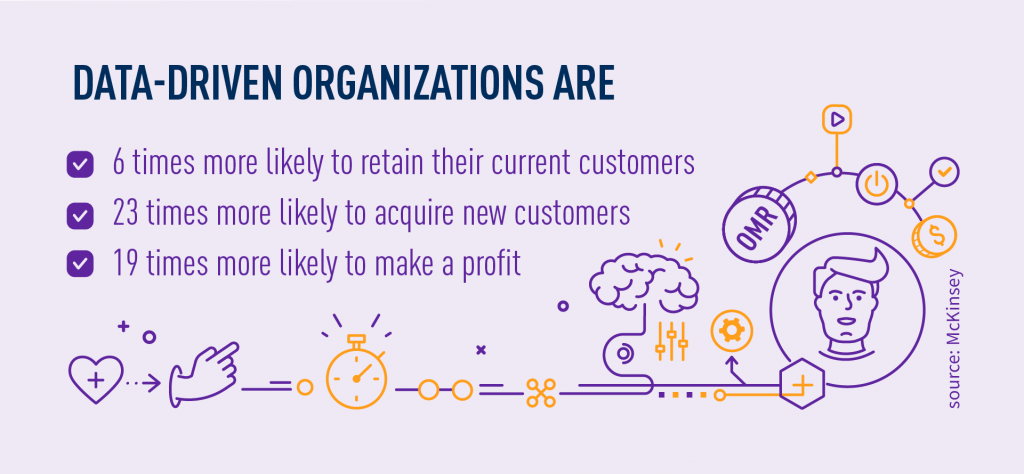
Source: McKinsey
Tracking performance across all channels makes a brand data-driven, which is 6 times more likely to retain its existing customers, 23 times more likely to gain new customers, and 19 times more likely to be profitable. Talk about benefits!
The Smart Visibility Stack: Combining SEO, PPC, and AI-Driven Marketing
How SEO and PPC Work Better Together?
The performance of SEO and PPC is maximised when they share their performance data, since paid search performance provides insights into how real users use words to conduct searches, and SEO provides a foundation for long-term visibility for searches that have already been proven to be valuable.
When SEO and PPC are closely aligned, they provide a framework for reducing wasted opportunities by improving operational efficiency with regard to the acquisition and conversion.
Why AI SEO Is the Missing Layer in Modern Search Strategy?
AI SEO connects traditional search engine/popularisation strategies to future methods of discovering content. The content that is AI SEO optimised will have greater chances of being found by a user through search engines, but also, as rank for voice searches, SGE, and LLMO, which is the next evolution in SEO.
Read more: LLMO Explained: The Future of SEO and Why It Matters
When to partner with an SEO marketing agency for scale?
A professional SEO marketing agency like Nethority will provide you with a single source for all of your needs: technical SEO, content, PPC insights, and AI optimisation. When you have an experienced partner coordinating all four of these areas, you can learn how to optimise your website better. Digital marketers and SEO specialists at Nethority unify technical SEO, PPC insights, AI optimisation, and analytics into a single digital marketing strategy for utmost visibility for your brand.
Final Thoughts: A Smarter Approach to Google Searchability and Website Ranking
The visibility puzzle can no longer be solved simply by determining which area of digital marketing (SEO, PPC, or AI) would be best for your business. The solution is understanding how all of them can work together to support and enhance one another.
SEO creates a long-lasting, reliable presence in Google. PPC offers quick results and insights into your business. AI enables brands to be discovered for answers. When combined, these three areas create a visibility stack tailored to the way AI and Google searchability work today and the way they will evolve in the future.
FAQs:
Yes, AI is being applied in various areas of SEO, including keyword discovery, content grouping, technological reviews, searcher intent analysis and predicting future performance.
Digital marketing visibility refers to how easily your website or brand can be found throughout a search engine results page, advertisement, artificial intelligence summaries, social media platforms, and voice-assisted devices during your customers’ decision-making processes.
PPC (Pay-Per-Click) is about spending money on advertisement placements today for immediate visibility. Search Engine Optimisation (SEO) focuses on gaining long-term visibility in organic search results.
AI can help marketers understand their customers by using large quantities of historical data to predict how they will behave in the future, create experiences that are custom-designed for them, and automate business decisions for better performance.
AI Marketing Tools are applications that automate many of the manual tasks associated with marketing, such as keyword research, advertising optimisation, content auditing, personalisation and performance forecasting through the use of machine learning techniques.