We know what it’s like – you’ve spent countless hours perfecting your SEO strategy, fine-tuning your content, and optimising your website… only to watch your traffic numbers drop anyway!
And here’s the kicker – it’s not because your content isn’t good enough. It’s because approximately 60% of Google searches in 2024 resulted in zero clicks.
That means users are getting answers without ever visiting your website! Talk about a BIG loss for website owners.
A Bain study found that 80% of searchers now rely on “zero-click” results for at least 40% of their searches, which has slashed organic web traffic.
So what can you do about it? The answer is Answer Engine Optimisation (AEO).
Unlike traditional search engine optimization, which focuses on broad keyword visibility, AEO creates content that directly answers specific questions in a concise, accurate manner.
This approach isn’t just nice to have – it’s becoming ESSENTIAL as voice search continues to grow and as Google’s AI Overviews completely reshape how users interact with search results.
We understand how overwhelming this shift can feel – after you’ve mastered traditional SEO, now there’s something new to learn!
In this guide, we’ll dig deep into exactly how you can optimise your content for zero-click searches and AI summaries in 2025, ensuring you don’t get left behind in this new search landscape.
What is Answer Engine Optimisation(AEO)?
Have you ever wondered why your perfectly SEO-optimised content isn’t getting the traffic it deserves? It’s likely because you’re still focused on traditional SEO rather than AEO!
Answer Engine Optimisation (AEO) is the process of structuring your content to provide direct, concise answers to user queries across AI-driven search platforms.
Unlike traditional SEO, which focuses on ranking in search results pages, AEO ensures your content becomes the direct response in AI-generated answers, featured snippets, and voice search results.
What does this mean for you? AEO tailors content to satisfy the intent of searchers by delivering accurate, relevant responses—whether through text, lists, tables, or other formats.
This approach requires understanding context and user intent rather than merely targeting keywords.
How AEO fits into the AI-powered search engine landscape
The search world isn’t what it used to be – and it’s changing FAST thanks to AI advancements.
Did you know that according to Gartner predictions, by 2026, traditional search engine volume will drop by a whopping 25%?
Search marketing is steadily losing market share to AI-powered search engines like ChatGPT and Perplexity.
These systems do the searching for users, retrieving information and presenting synthesised answers – eliminating the need to browse multiple results.
With hundreds of millions of daily questions now answered by AI engines, optimising for these platforms isn’t optional anymore – it’s *absolutely* necessary!
The rise of zero-click searches
Imagine this: a user types a question into Google and gets their answer right on the results page – no need to click through to any website.
That’s a zero-click search, and it’s completely changing the game. This makes it important for you to tweak your content strategy to make room for this DRAMATIC trend.
The benefits of zero-click searches include better brand visibility, better conversion rates, better user satisfaction, and establishing your brand as an authority in your industry.
But what’s driving this massive shift? A few key factors are:
- Enhanced SERP features like featured snippets and knowledge panels
- User preference for immediate, accurate information
- Growth of voice search and mobile usage
- Google’s expanding knowledge base
These changes have permanently altered the SEO landscape as we know it.
What does this mean for you? Being the first organic link isn’t enough anymore if your content isn’t optimised to BE the answer itself.
How is AEO different from traditional SEO?
The biggest difference between SEO and traditional SEO is all about what they’re trying to achieve.
Traditional SEO aims to drive website traffic by ranking higher in search results, whereas AEO focuses on providing direct answers through featured snippets and zero-click results.
This is why many SEO agencies are now incorporating AEO in their strategies.
Here’s what makes them different:
- Goal orientation: SEO wants to get users to your website; AEO ensures your content appears as THE answer to user queries
- Content structure: SEO loves detailed, comprehensive content; AEO prefers short, clear answers (often in lists or bullet points)
- Result presentation: SEO fights for those top rankings; AEO targets featured snippets, knowledge panels, and voice search results
Think of it this way – SEO is about getting people TO your content, while AEO is about getting your content TO people… even if they never visit your site!
Also, with AI-powered search taking over, understanding intent has become even more crucial than keywords themselves.
Google splits search queries into four main types:
- Informational – seeking knowledge
- Navigational – looking for specific websites
- Transactional – ready to purchase
- Commercial Investigation – researching before buying
AEO mainly targets those informational queries, providing instant answers instead of making users browse multiple websites.
This perfectly matches how people search today – we all want immediate, relevant responses that exactly match what we’re looking for.
Another important factor to consider is the rise in conversational queries. Just a while ago, people used to search specific keywords, but with the emergence of AI, user queries have evolved too.
This means your keyword research needs to be upgraded, too! You can use AI tools for SEO, and Google’s “People Also Ask” to help you discover these conversational search patterns.
The bottom line? Traditional SEO isn’t dead, but it’s definitely not enough anymore. To stay visible in 2025 and beyond, you need to master BOTH approaches.
For example:
Source: Streamlyn Academy
A popular beauty brand, Nykaa successfully implemented AEO along with its traditional SEO efforts by creating structured, intent-based content through its Beauty Book, product FAQs, and videos.
This helped it rank in featured snippets, boost organic traffic, and convert beauty queries into product purchases.
How to optimize for zero-click searches and AI summaries?
So now that we understand what AEO is and how it differs from traditional search engine optimisation, let’s get into the practical stuff – how exactly do you optimise your content for AI summaries and zero-click searches?
We’ve put together a list of proven strategies that you can implement right away. Let’s begin!
#1 Identify question-based queries
First things first –
You need to know what questions your audience is actually asking.
Tools like AnswerThePublic pull autocomplete data from search engines to create comprehensive lists of questions around your keywords.
It organises these by question words (who, what, where, when, why, how), making it super easy to spot patterns in what your users are looking for.
Many users report saving DAYS or even WEEKS on manual keyword research with this tool!
But don’t just focus on informational queries – look for questions with high commercial intent that can actually lead to conversions.
#2 Structure content for featured snippets and voice search
Featured snippets appear at the top of search results – they’re prime real estate for zero-click optimisation!
To structure your content properly, make sure you use:
- Clear H2/H3 headings that include your target questions
- Bullet points and numbered lists for step-by-step processes
- Tables for comparing products or presenting data
- Short paragraphs (just 1-2 sentences) that work well on mobile
For voice search SEO, you need to use conversational, long-tail keywords that sound like natural speech.
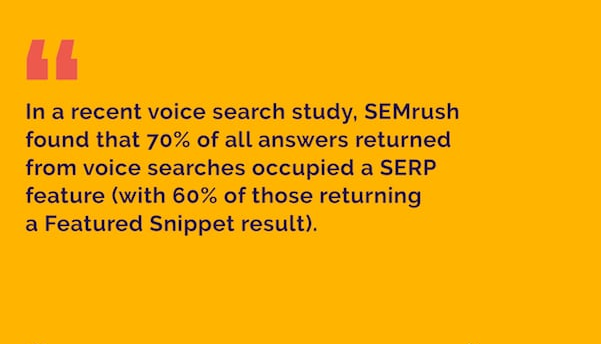
Did you know that a voice search study found that 70% of all answers returned occupied a SERP feature, with 60% of these from featured snippets?
This makes optimising for these features VERY important!
#3 Use schema markup
#4 Write concise, direct answers within the first 100 words
Make sure you position your answers right at the beginning of your content.
Featured snippets typically pull about 40-50 words, so you need to front-load your most valuable information.
Use active voice and simple language – nobody wants to wade through technical jargon unless you’re specifically explaining industry concepts.
Remember, clarity wins over complexity every time!
#5 Build topical authority with content clusters
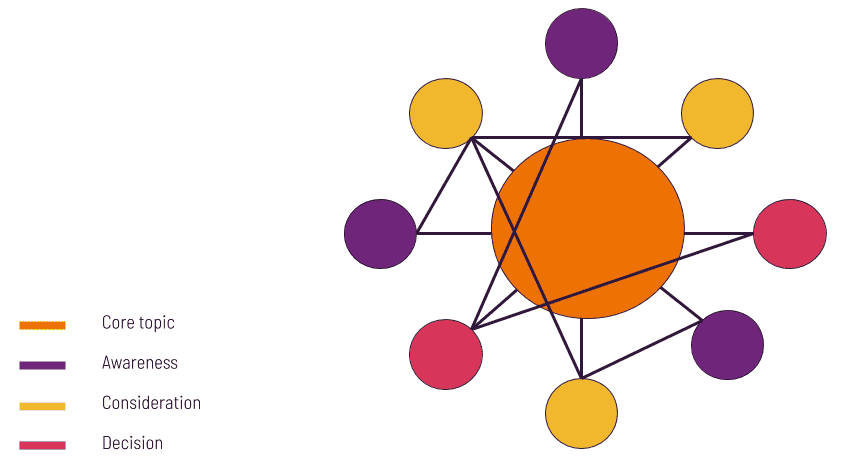
For solid AEO strategies, make sure you create comprehensive coverage around central themes using topic clusters.
Now, topic clusters are collections of interlinked pages that focus on different aspects of a main topic.
This structure shows search engines the breadth of your expertise while also organising your content logically for users.
Think of it as building a web of knowledge around your core topics.
#6 Test your content
Finally, put your optimization efforts to the test by seeing how AI-powered search interprets your content.
Companies that implement AI testing have seen their visibility increase by 4x after structured engagement programs. That’s HUGE!
You can also make sure you monitor citation frequency, brand mention accuracy, and referral traffic to measure your success.
Tracking AEO success
Google Search Console is your best friend when it comes to tracking AEO success. Focus on monitoring these key metrics:
- Snippet appearances (featured snippets, knowledge panels)
- Query data, especially those question-based searches
- Click-through rates from AI Overviews
- Position changes for question-oriented content
Did you know that web pages included in AI Overviews receive 3.2 times more clicks for transactional queries and 1.5 times more clicks for informational queries, comparatively?
Other than that, time on page, bounce rate, and conversion rate will tell you exactly how well your content strategy is working & answering user questions.
You should also monitor:
- Voice search rankings
- AI-driven traffic patterns
- How often your content gets featured in snippets
For a more comprehensive analysis, use tools like SEMrush alongside Google Search Console to track your featured snippet appearances.
This combined approach shows you the true impact of your AEO strategy – and trust me, the results can be eye-opening!
Conclusion
The search landscape has COMPLETELY transformed with AEO, and it’s becoming crystal clear that a good content strategy is absolutely essential for survival in 2025 and beyond.
Even though keywords still matter, questions and direct answers are what truly drive visibility now.
The businesses that take the time to restructure their content to address specific queries will gain massive advantages as zero-click searches continue dominating the landscape.
Is this transition going to require effort? Absolutely. But the potential rewards are SUBSTANTIAL.
Companies that master AEO now will establish themselves as authoritative sources in AI-generated answers, securing their visibility regardless of how search interfaces evolve.
To sum it up, the future of search belongs to those who understand and meet user needs instantly.
By implementing these AEO strategies today, you position your business to thrive in tomorrow’s AI-powered search reality.
Want to get started with AEO right away? Reach out to us for expert guidance on optimising your content for the new search landscape!