
The Digital Marketing Funnel Nobody Talks About: From Traffic to Repeat Sales
23rd October 2025 / in Ecommerce / by Ruturaj Kohok
The ultimate goal of every brand’s marketing efforts is sales. However, many of them think that is the end of it, and they couldn’t be more wrong. While focusing on acquiring new customers and leading them to conversion is important, there are two more crucial stages in the digital marketing funnel: extending one-time buyers into loyal customers and their advocacy of your brand.
It is essential to design a marketing funnel that not only acquires users but also nurtures them. This helps you build a brand that leads to sustainable growth, not just one-time sales. In this blog, we will discuss in detail the modern digital marketing funnel that brands need to build in 2025 and beyond, how the customer journey is navigated through different stages of the funnel, and how you can create a funnel that brings to you not just conversion but also repeat purchases.
Let’s dive in!
What is a digital marketing funnel, and why does it matter?
Understanding the marketing funnel
A digital marketing funnel is a business model based on the concept that explores how a user navigates through various stages of his/her customer journey to become a loyal customer of your brand. For a long time, the traditional marketing funnel only extended the user journey till the first purchase, but in today’s newer models, the digital marketing funnel stages include awareness, consideration, conversion, retention, and advocacy.
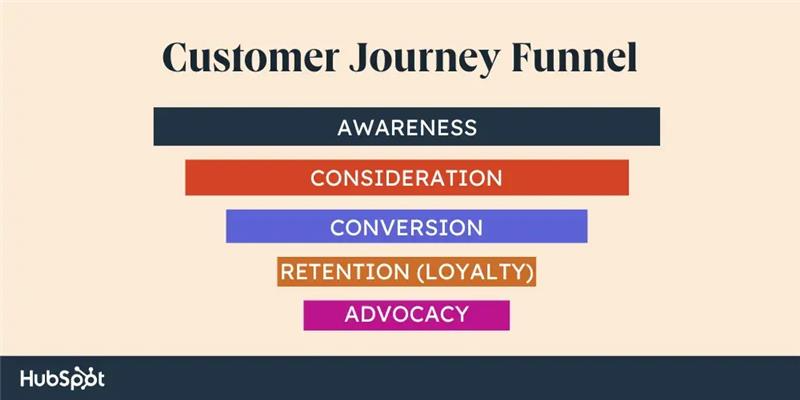
Source: HubSpot
Now, each stage requires its own strategy, communication, and tracking. However, having these stages can help you plan your messaging, budgets, and performance across the customer journey. This can help you or your partnering digital marketing agency to create a comprehensive strategy that caters to all stages of the user journey.
Why are traditional marketing funnels outdated?
Until a few years ago, many people believed that marketing followed a very straightforward, one-directional, static path. Even the traditional marketing funnels ended with the customers making the first purchase. However, there was a glaring issue with this: it didn’t take into account the user behaviour post-purchase, and had no strategies to drive repeat purchases and increase the lifetime value of every customer.
This approach could not be further from the truth. The modern marketing funnel has become much more dynamic; it understands that the user journey is not linear, as there are different channels to target a single user. It considers user expectations of personalisation and post-purchase services, and strategises to improve customer retention, closing the loop.
How does the marketing funnel work across the customer journey?
#1 Awareness: Capturing user attention
The awareness stage is a part of the top of the funnel marketing, where the primary goal is to attract relevant users to your brand, who can later become your customers. This can be done through social media, influencer marketing, PR, content marketing, paid ads, and SEO. This way, you can optimise your content to reach people who are more likely to engage further. AI-based searches are also changing how users interact with your brand, and optimising for AI summaries and zero-click searches can also improve visibility in your top-of-the-funnel marketing. Remember, building your visibility and trust is key to the awareness stage.
#2 Consideration: Building trust and engagement
Once a user knows your brand, they gently move ahead into the consideration stage of the marketing funnel, where your aim is to nurture the interest they have shown in your brand. This is the middle funnel, and the strategies for this stage include educating users to make them more confident about your brand. You can highlight your USPs, target their pain points, and show social proof. The goal is to nurture them effectively, further nudging them into the conversion stage of the digital marketing funnel.
#3 Conversion: Turning intent into action
The user is ready to act when they enter the conversion stage, which is also known as the bottom funnel of the user journey. This is where your communication becomes more direct, persuasive, and urgent. Optimising the checkout flow on your landing pages, consistent messaging between the landing page and your ads, and clear CTAs can also significantly improve your D2C website conversions. A thorough website audit can help you identify areas that need optimisation for better conversions. This can lead to better sales and pave the way for the next stage of the funnel: retention of customers.
#4 Retention: Driving repeat purchases
Retention is a crucial stage of the digital marketing funnel, as it is a direct reflection of the post-purchase engagement in the customer journey that drives repeat purchases. This can be done through personalised follow-up emails, loyalty programs, exclusive offers, and impeccable customer support.
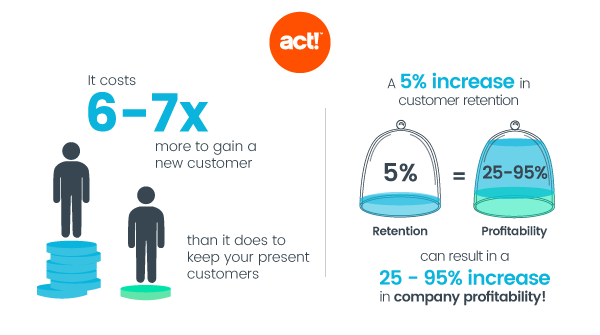
Source: Act!
It is important to note that customer acquisition costs 6-7 times more than retention. Also, a mere 5% increase in retention of customers can lead to a 25-95% increase in profit. This shows how repeat purchases have a compounding effect, making it imperative for marketers and professional digital marketing agencies to strategise to improve customer retention.
#5 Advocacy: Happy customers to brand ambassadors
Advocacy is a fruitful digital marketing funnel stage, as customers who are happy with your products and offerings further promote your brand. They can share reviews, refer to their friends and family, post on their socials, and create UGC for your brand. This essentially becomes a free channel of marketing. You can offer incentives on referrals, offer exclusive discounts to customers who promote your brand, and create communities to keep them engaged. This brings back more users in the awareness and consideration phases, bringing you new potential customers.
Mapping the user journey beyond the marketing funnel:
Why is the user journey not linear anymore?
Because users use more than one device, research quite a lot before making a purchase, and might bounce between different marketing channels, the user journey is anything but linear. They might discover your brand on social media, visit your website, and bounce. Later, they could get retargeted and then convert, eventually looping back to your website for offers and new content. This makes it impossible to individually strategise for each stage of the marketing funnel. A professional digital marketing agency like Nethority accounts for this non-linearity by strategising for cross-channel and multi-device interactions.
Personalisation across the user journey:
Another way to map the user journey is using analytics and other tools like CRM dashboards, heatmaps, and marketing automation platforms to collect demographic, behaviour, browsing, and purchase data to personalise your messaging across all digital marketing funnel stages.
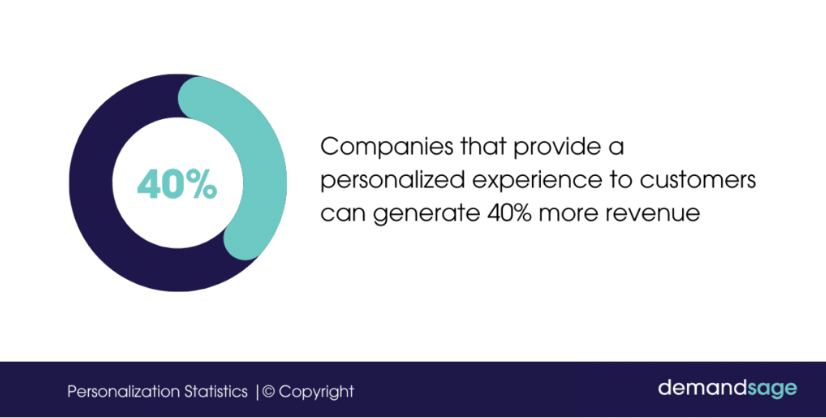
Source: Demand Sage
It is important to note that companies providing a personalised experience in the user journey generate a 40% higher revenue. It also boosts engagement, conversions, and loyalty, bridging the gap between the brand and the users and creating more relevant customer journeys.
How can you build a profitable digital marketing funnel for your brand?
There are many marketing tactics you can use to target various stages in the marketing funnel. Read a more comprehensive guide here.
Step #1: Attract the right traffic
To build a profitable digital marketing funnel, you first need to attract the right traffic through top-of-the-funnel marketing. You can go for SEO keyword research, collaborate with influencers, and run targeted campaigns on social media and search engines to get more users aligned with your niche. This brings quality traffic that resonates better with your brand.
Step #2: Nurture with intent-driven content
When users enter the consideration stage of your marketing funnel, it is important to deliver content that aligns with their intent. Use content hacks for better messaging and communication that nudge them further: for users in the early consideration stage of their customer journey, you can share more educational content. As they move to the mid-stage, you can offer content that shows your propositions, comparisons with competitors, and more. Toward the end of the consideration stage, you can deliver customer testimonials, stories, and product demos for an efficient transition into the conversion stage.
Step #3: Convert using seamless digital experiences
For better conversions, your landing pages, checkout processes, website designs, navigation, and other interactions need to be frictionless. This reinforces the trust that you built in the consideration stage. Ensure that your messaging is consistent throughout, CTAs and visual cues are clearly placed, and the website speed is efficient. Additionally, as most conversions now happen through mobile devices, it is important to implement a mobile-first strategy for better results.
Step #4: Automate and retain
One-time purchases are great, but it is crucial to set up automated systems that keep users engaged even after their purchase. You can send personalised emails based on their purchase, for example, tips to use the product, complementing purchases, additional offers, and more. You can also introduce subscription plans or loyalty programs if applicable. Retention strategies that are built on automation and personalisation efficiently lead to repeat purchases.
Step #5: Analyse and refine continuously
Once all your strategies are in place, it is also a good idea to monitor your performance. Use analytics, user feedback, their behaviour and patterns, and heatmaps to analyse and refine each stage. Having a data-oriented mindset ensures that your marketing funnel keeps improving.
Final Thoughts: Turning a Digital Marketing Funnel into a Growth Engine
A modern digital marketing funnel does not stop when the users make their first purchase; it leads to a more nuanced customer journey that includes further stages such as retention and advocacy. As the user journey is more dynamic today as compared to just a few years ago, your marketing funnel needs to have strategies that can accommodate AI, personalisation, feedback loops, and omnichannel marketing. All these lead to repeat purchases and customer loyalty, resulting in a long-term, sustainable growth.
FAQs:
A digital marketing funnel is a conceptual structure that helps users discover your brand, nurtures them, leads to conversion, and eventually turns them into loyal customers.It helps businesses to strategise efficiently for better results and achieve consistent growth throughout the user journey.
The five stages of the marketing funnel spans the customer journey into five stages: awareness, consideration, conversion, retention, and advocacy. Users move from awareness to advocacy, resulting in new sales as well as repeat purchases.
A marketing funnel ensures that through each phase of the user journey, the communication aligns with their intent and inches them closer towards making a purchase and becoming long-term advocates for the brand.
Retention is crucial in the digital marketing funnel as it costs significantly less to retain existing customers than it does to gain new ones. Retention strategies help brands nurture their current customers and drive them towards becoming loyal advocates.
To help with building a successful marketing funnel, you can use tools such as Google Analytics, Ad Manager, HubSpot, and other email marketing tools that can create, regulate, and optimise each stage, resulting in sustained growth for your brand.