
Ecommerce Challenges That Can’t Be Fixed with Ads or Discounts
20th January 2026 / in Ecommerce / by Ruturaj Kohok
- Reading time: 9 mins 25 Sec
In the initial stages of building an ecommerce business, many D2C brand owners rely on ads, offers, and discounts to chase growth. This offers short-term benefits, such as increased traffic, higher revenue, and overall growth. However, to move beyond the initial phase, ecommerce founders realise that paid marketing is not the most reliable in the long term. Working with a range of growth marketers, founders, and operations teams across many ecommerce business models and online marketplaces, we at Nethority have identified one pattern. If your customer experience is poor, internal systems are weak, or business models are unsustainable, no amount of paid ads can cover it up. These real ecommerce challenges show up when an ecommerce website starts to scale.
Understanding the Real Ecommerce Challenges Beyond Marketing Spend:
A lot of times, ecommerce challenges are considered limited to issues with traffic or visibility. However, it couldn’t be farther from the truth.
The biggest challenges go beyond marketing; they’re found inside the ecommerce business model: in poor operational efficiency, website performance, and funnel optimisation.
These inefficiencies increase with marketing spend. It causes conversion rates to get stagnant and margins to shrink, leading growth to get farther and farther away. In such times, if you increase your marketing spend and ad budgets, it would only give you short-term gains but set you up for a long-term crash.
Sustainable growth requires founders and operations managers to focus on the structural problems across all ecommerce platforms and fulfilment centres, so you don’t chase short-term performance metrics but work towards sustainable growth.
Why These Ecommerce Challenges Appear After ₹1Cr–₹10Cr Revenue?
The ecommerce industry challenges businesses face once they start to scale, right around the ₹1Cr to ₹10Cr mark in revenue, because early growth conceals inefficiencies in processes, tools, and workflows. Teams and workflows start to shape differently as revenue increases.
Once a business starts generating a considerable revenue, these systems cannot sustain the volume. This can lead to inventory errors, customer complaints, and increased operational costs to keep everything in check.
This makes it clear that your ads are not the issue; it’s non-scalable systems across ecommerce platforms, customer experience, and operations.
When the Ecommerce Business Model Itself Becomes the Bottleneck?
Many ecommerce business models rely heavily on paid customer acquisition and frequent discounts, which is not a sustainable way of scaling. This can bring in initial traffic and revenue, but it creates a bottleneck in long-term profitability.
Every ecommerce business needs a strong product-market fit and value proposition that shifts the strategy from competing based on price to creating a place in the market with efficient brand positioning.
Balanced acquisition and retention strategy, trust and credibility, and efficiency in operations can create a business model that drives lasting, long-term growth.
Website Experience Issues That Ads Can’t Compensate For:
When building an ecommerce website, it’s important to note that performance is more important than design and aesthetics. Ads can drive users to your site, but if the website experience is poor, they won’t stay, browse, or shop.
Source: Baymard
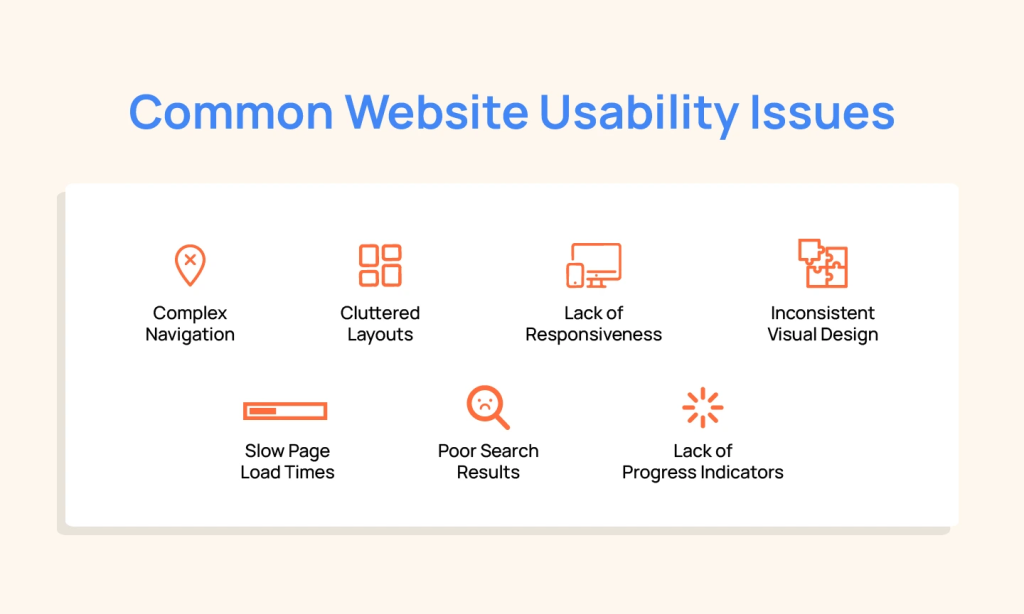
According to a study by Baymard, the most common website experience issues include complicated navigation, cluttered and unresponsive designs, inconsistent visuals, slow loading times, poor search results, and a lack of progress indicators. This has a direct impact on your trust and credibility, conversions, and repeat purchases.
Website UI / UX and Conversion Rate Optimisation Challenges:
When it comes to Conversion Rate Optimisation, website UI / UX is a critical consideration. If your website is difficult to navigate, product information is not clear, page loading speed is slow, and design is inconsistent, they are sure-shot conversion killers for your ecommerce website.
This makes it important to understand user behaviour to improve UI and UX efficiently, ensuring the traffic on your website converts.
Checkout Systems and Payment Friction:
One of the biggest ecommerce challenges is checkout systems. Customers need to feel secure and certain with payments, checkouts, all relevant charges, and payment options.

Source: Webuters
According to a Baymard study published by Webuters, 48% of users abandon their carts due to extra costs that cause payment friction, 23% due to delivery timelines, 22% due to complicated checkouts, and 18% due to improper return policies.
Now, ads can get these users to your website, but they cannot override these concerns, imploring you to have abandoned cart recovery strategies in place, especially on mobile commerce platforms.
Ecommerce Platform Limitations and Technical Debt:
The choice of an ecommerce platform for your business is one of the most important decisions for a D2C brand owner. Sometimes, the platform you choose early on can limit your growth with increased complexity and business volume.
Platform Constraints:
Ecommerce platforms such as Shopify, Magento, and WooCommerce each suit different business needs. Even so, many businesses face limitations when it comes to customisation, scalability, and integrations, which can significantly slow down growth.
It is important to have a platform strategy for a scalable and flexible ecommerce business. However, many times, brands can still try to work the same platforms they initially began with, increasing technical debt over time. This could cost them performance, operational efficiency, and flexibility in scaling.
Website Performance and Core Technical Stability:
Reliability and stability are important considerations of a website’s performance. If it’s slow and unresponsive, it could hamper customer trust as well as your revenue. There needs to be a core technical stability in your ecommerce website so it works consistently.
Weak core stability in your websites requires teams to spend time on fixing these issues, rather than tackling more important ecommerce challenges to improve growth. Therefore, it is important that your systems are reliable, so the traffic that paid ads get to your website converts.
Operational Inefficiencies Hidden Behind Revenue Numbers:
Many times, an ecommerce business model might generate high revenue initially. However, it is in no way an indicator of operational efficiency. Until you scale your business, many operational issues might not surface because of limited volume.
Inventory Management Systems and Demand Mismatch:
As you scale, it becomes imperative to have inventory management systems in place to balance demand and supply. Accurately predicting demand is important for any ecommerce business, as mismatched stocks with demand could hurt your revenue. Now, paid ads could definitely generate demand, but without proper systems for inventory management, it could get chaotic as well as expensive.
Source: Jelvix
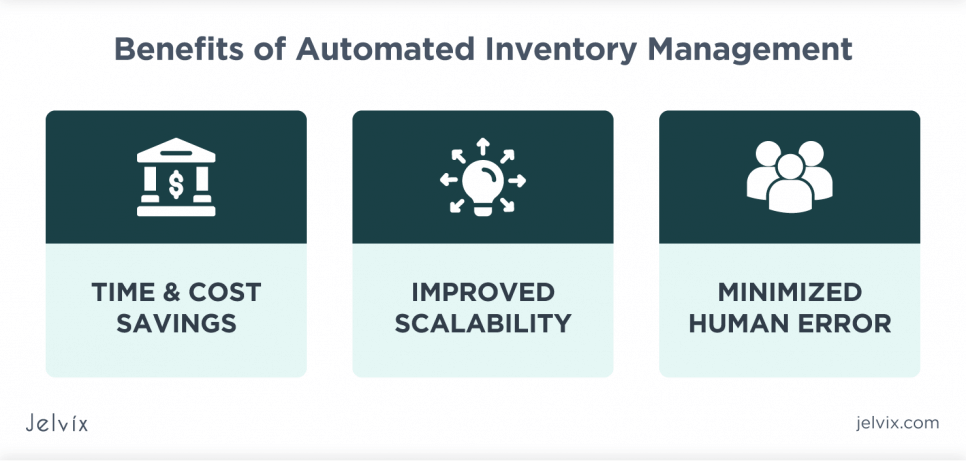
According to research by Jelvix, the major benefits of having an automated inventory management system for growing businesses are time and cost savings, improved scalability, and minimised human errors. This improves operational efficiency and allows ecommerce founders to focus on scaling.
Fulfilment Centres, Logistics, and Shipping Reliability:
Delivery is an important consideration for any ecommerce business. If your goods are damaged in delivery, shipments are delayed, or delivery timelines are not maintained, it may increase related support costs, refunds, and more. Therefore, it is important to have efficient logistics and shipping tools in place to meet customer expectations across global ecommerce markets.
Customer Experience Gaps That Kill Retention:
Customer experience majorly determines if the customer will stay true to your brand and buy from you again. Retention is an ecommerce challenge that many D2C brand owners face, making it crucial to reduce customer experience gaps as much as possible. This can be done by setting up an in-house team or hiring marketing partners, such as Nethority, to help with efficient customer relationship management.
Customer Support Software and CRM Tool Integration:
To offer cohesive experiences, it is important to integrate customer support software and CRM tools. If your experiences are fragmented, customer issues will be open for longer, they will have to wait longer for resolution, and it might make them feel undervalued.
If you integrate customer support with CRM tools such as HubSpot, Zoho CRM, Salesforce, and Klaviyo, it can help you to understand the previous behaviour, purchase patterns, and issues of the customer and help solve them faster.
Source: SuperOffice CRM
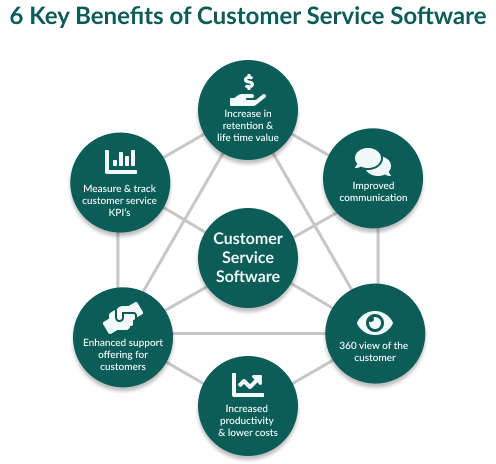
According to an article published by SuperOffice CRM about types of customer service software, the key benefits of utilising a customer service software includes increase in retention and customer lifetime value (CLTV), improved communication, 360 view of the customer, increased productivity and lower costs, enhanced support for customers, and monitoring and tracking customer service KPIs.
Building Trust and Credibility in Ecommerce:
The main reason why any user will buy from you is trust; it’s the foundational value in ecommerce business models, as customers need to find you trustworthy and credible to engage with your brand.
It is important to have clear policies, transparent communication, consistent service, and efficient delivery for customers to build trust in your brand. Ads might bring them to your brand, but consistent effort builds trust, drives loyalty and repeat purchases.
Funnel Optimisation Problems Across the Customer Journey:
It is important to optimise all stages of the digital marketing funnel to ensure a smooth customer journey. Even if one stage of the funnel is weak, it might impact the overall performance of your brand.
Pre-Purchase Friction and Brand Positioning:
If your brand positioning isn’t clear, it could cause friction before a customer purchases from you, because of a lack of trust and clear information. The customer should not struggle to understand why your brand and product is right for them. You should focus on building a strong positioning that reduces these friction points and hesitations to increase conversions. A good positioning does not require you to offer discounts to convince buyers.
Post-Purchase Experience and Retention Strategy:
If your customers will engage with your brand again is driven majorly by your brand’s post-purchase experience. This ultimately becomes a part of your retention strategy, and brands that do not consider this lose customers, despite spending on acquiring new customers.
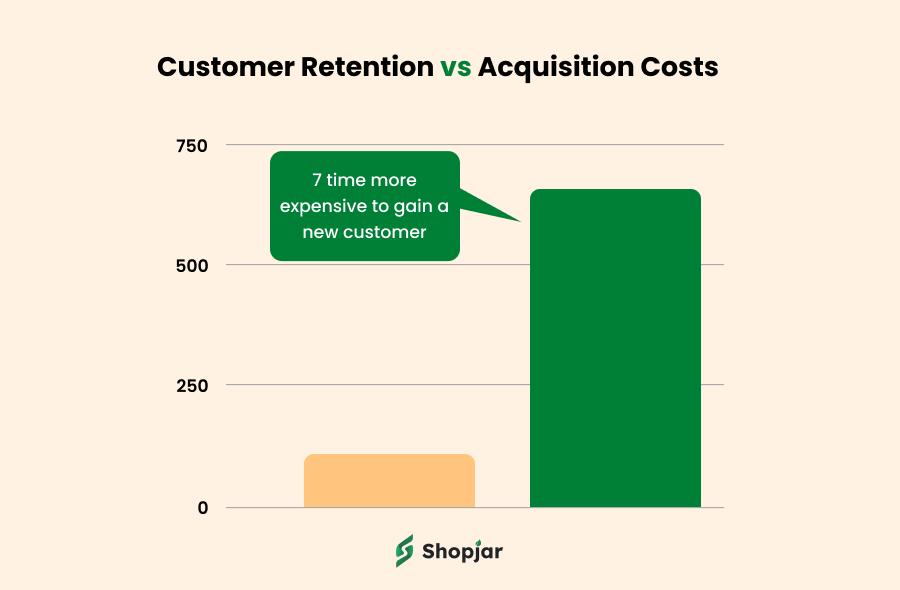
Source: Shopjar
According to Shopjar, it is 7 times more expensive to acquire a new customer than it is to retain an old one. This makes it important for ecommerce businesses to focus on retaining existing customers along with getting new ones.
Why Customer Lifetime Value Matters More Than ROAS
Customer lifetime value (CLTV) is the total revenue that a customer generates in their lifetime as your customer, whereas return on ad spend (ROAS) is the revenue earned against the budget spent.
The reason why CLTV matters more than ROAS is that the former considers retention, repeat purchases, and loyalty, whereas ROAS is focused mainly on earnings against a set budget. CLTV reflects long-term brand health, whereas ROAS measures short-term efficiency.
If you want your business to overcome ecommerce challenges to drive sustainable growth, it is important that you prioritise lifetime value over immediate gains.
Final Thoughts: How Scalable Ecommerce Systems Replace Ads-Dependent Growth
To achieve sustainable ecommerce growth, it is important to have systems in place and not look for shortcuts like discounts and ads. These tactics might work initially when the business is small and volume is low, but as you scale, you need to cultivate strong business models, utilise reliable ecommerce platforms, achieve operational efficiency, and build trust and credibility for long-term success.
Nethority identifies that there needs to be cohesion between your systems, customer support, teams, operations, and workflow to scale your business and achieve sustainable growth and revenue. Get in touch with us today to overcome ecommerce challenges and scale your brand.
FAQs:
The most common ecommerce challenges faced by D2C brands include weak business models, inefficient operations, a lack of retention strategies, poor website performance, constraints in scalability, and a lack of customer trust.
Ads and discounts might work temporarily but they cannot address structural issues in business models, such as poor customer experience, weak retention strategies, low profit margins, and inefficient operations.
Brand positioning reflects how you are perceived and how you’re different from your competitors. This becomes a differentiator that builds trust, reduces competition, improves loyalty, and drives sustainable ecommerce growth.
Operational issues impact ecommerce revenue adversely, as they can cause inventory errors, demand mismatch, delivery delays, customer dissatisfaction, and lower repeat purchases.
Website performance plays an important part in ecommerce success as it directly affects user experience and cart abandonment through website speed, trust, reliability, and conversions.