Have you ever wondered why so many online stores disappear almost as quickly as they launch? That’s the harsh truth; most ecommerce businesses ultimately fail. Whether you’re running a traditional ecommerce store or exploring dropshipping, the success rates tell the same grim story. Around nine out of ten businesses never make it.
So what’s killing these online stores? Poor e-commerce marketing efforts account for a majority of failures, while a lack of search visibility also remains a top reason. But here’s what catches many store owners off guard: inadequate inventory management and over-reliance on platforms like Shopify and BigCommerce without a proper strategy severely limit your control, flexibility, and long-term viability.
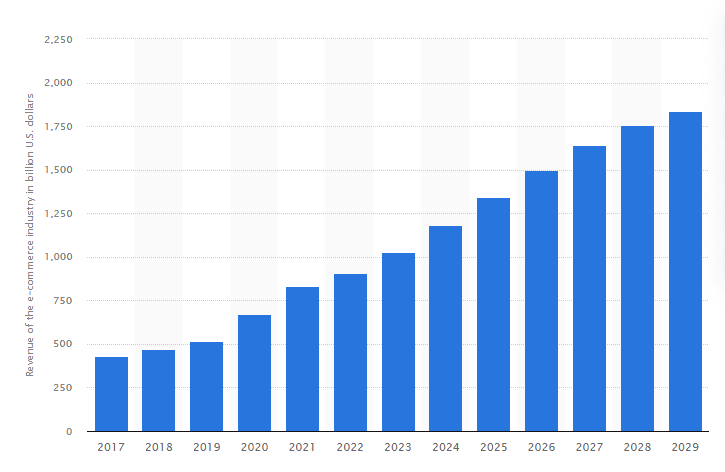
The timing makes this particularly painful. The U.S. ecommerce market is predicted to surpass $1498.94 billion in 2026; it’s a massive potential that most businesses fail to capture.
Your e-commerce platform strategy isn’t just about which buttons to click or how pretty your store looks. The stakes go much deeper than that. Your platform choice becomes fundamental to business survival, not just convenience. Without a well-thought-out platform strategy, you’re not just risking slower growth. You’re setting yourself up to become another statistic in that 90% failure rate.
Your ecommerce presence means nothing without the right foundation underneath it. The platform you choose affects everything from how customers experience your store to how efficiently you can manage daily operations. Think of your platform as the engine that powers every aspect of your online business. If you get it wrong, even the best e-commerce marketing efforts can’t save your business.
E-commerce platforms are software solutions that enable businesses to build, manage, and operate online stores. They handle the critical functions that keep your business running: product catalogue management, inventory tracking, payment processing, and checkout experiences.
Here’s what separates robust ecommerce platforms from simple website builders. Many popular e-commerce platforms offer comprehensive toolsets that extend far beyond just displaying products, and include marketing tools for targeted promotions, analytics for data-driven decision making, customer relationship management capabilities, inventory and order management systems, and payment gateway integrations.
These features create the infrastructure for both what customers see and how your business operates behind the scenes. Every online purchase made from your store is powered by commerce software. Platforms with integrated marketing capabilities allow you to execute end-to-end digital marketing strategies, including SEO tools that enhance your site’s visibility.
The difference between hosted and headless ecommerce:
The architecture of your ecommerce platform fundamentally shapes how your business operates online. You have two primary approaches to consider: hosted e-commerce and headless e-commerce.
Hosted (Traditional) E-commerce:
This model combines front-end and back-end systems in one package. Your store’s visual appearance and backend functionality are tightly coupled, making it straightforward to set up initially. Platforms like Shopify e-commerce include website hosting in their plans, giving you less to worry about technically. This approach offers easier troubleshooting and operation since updates and bug fixes apply to a single codebase.
Headless E-commerce:
Your platform selection directly affects your ability to grow and adapt over time. Scalability in ecommerce refers to a platform’s capacity to handle increasing numbers of users, transactions, and data without performance degradation.
During peak shopping periods like Black Friday, unprepared systems can experience slow load times or crashes, resulting in significant revenue losses. Choosing a platform designed with scalability as a core principle becomes crucial as your business expands.
Many enterprises initially build custom e-commerce platforms seeking flexibility, only to find themselves eventually spending a significant portion of engineering resources on maintenance rather than innovation. Modern platforms like Shopify e-commerce provide scalability alongside security and compliance features, plus an ecosystem of apps and APIs that enable growth without technical debt.
Many popular e-commerce platforms allow you to scale in multiple dimensions: adding new products, entering new markets, adopting new business models, or expanding to international markets. It should also seamlessly integrate with other critical systems like ERP, CRM, and e-commerce marketing tools to ensure operational efficiency.
Poor platform choices don’t just slow you down; they create technical roadblocks that affect everything from site performance to your ability to grow. The consequences can be severe for your online business.
Slow Site Speed and Technical Limitations:
Site speed directly impacts your bottom line. Research shows that 57% of visitors abandon websites that take more than 3 seconds to load, and 80% of those users never return to the website.
Outdated or poorly optimised ecommerce platforms often suffer from several critical issues, such as slow database queries that increase page load times, inefficient code architecture causing resource bottlenecks, and limited server resources that can’t handle traffic spikes.
These technical constraints become particularly problematic as your store grows. Many businesses find themselves trapped in a cycle of workarounds and patches rather than building on a solid foundation. Development costs spiral as you try to optimise an inherently limited platform.
Limited Customisation and Poor User Experience:
The wrong e-commerce platform severely restricts your ability to create distinctive shopping experiences. Many out-of-the-box solutions offer limited design flexibility, forcing your brand into templated layouts that look like thousands of other stores.
When you can’t customise your product pages, checkout flow, or mobile experience, you’re essentially letting your platform dictate how customers interact with your brand instead of your business strategy. This inflexibility extends beyond aesthetics.
Without the ability to implement advanced features like personalised recommendations, dynamic pricing, or sophisticated filtering options, you’ll struggle to meet evolving customer expectations. Your e-commerce platform becomes a ceiling that limits your growth potential rather than a foundation that supports it.
Your ecommerce platform must seamlessly work with various tools and services in today’s interconnected digital ecosystem. Unfortunately, many platforms have limited integration capabilities or rely on outdated API architectures.
When your platform doesn’t play well with others, you face significant operational challenges, including e-commerce marketing tools that can’t access customer data, hampering segmentation efforts, inventory management systems that fail to sync properly, leading to overselling, and payment processors or shipping solutions that require costly custom development.
These integration issues create data silos across your business. Without a unified view of customer interactions, orders, and inventory, you make decisions based on incomplete information.
The right platform choice acts as either an enabler or a barrier to your ecommerce success. Selecting a platform that aligns with both your current needs and future aspirations prevents these performance issues from undermining your business potential.
All of these factors can lead to users abandoning their carts and not finishing their shopping journey due to these hurdles, costing you much more revenue than you think. An e-commerce agency like Nethority can help you overcome these barriers and reduce cart abandonment, leading to an increased number of conversions and revenue.
Also read: Abandoned Cart Recovery: Proven Strategies to Boost Sales by 30% or More!
What Happens When Your Checkout Process isn't Optimised?
Too Many Steps or Required Fields:
The digital checkout should flow like a conversation, not an interrogation. Many ecommerce platforms default to overly complex checkout flows that frustrate customers at the worst possible moment.
Studies reveal that 26% of shoppers abandon purchases because the checkout process feels too long or complicated. Every additional form field becomes another roadblock to revenue. Checkout processes requiring more form fields can significantly reduce conversion rates. The most popular ecommerce platforms enable streamlined experiences that capture only essential transaction information.
Lack of Payment Options:
Modern customers expect payment flexibility, and limited options can kill sales at the final moment. When your Shopify ecommerce store or other ecommerce platforms restrict payment methods, you risk losing ready-to-buy customers. Recent research indicates 6% of shoppers abandon carts when their preferred payment method isn’t available.
Digital wallets like Apple Pay, Google Pay, and PayPal now account for almost half of global ecommerce transactions. Buy-now-pay-later options have also grown increasingly popular. International shoppers expect region-specific payment methods. Without these options, your global ecommerce marketing efforts fall flat exactly when they should succeed.
No Guest Checkout or Mobile Optimisation:
Forcing account creation before purchase creates unnecessary friction that costs conversions. Nearly 34% of shoppers abandon carts when required to create an account, making guest checkout functionality essential for success.
Your e-commerce marketing strategy can be brilliant on paper, but it falls apart when your ecommerce platform doesn’t play nicely with your marketing tools. Even the most creative campaigns struggle to deliver results when your systems work in isolation rather than as a unified ecosystem.
Missing SEO and Analytics Foundation:
Strong platform integration puts essential ecommerce marketing tools directly in your hands. Fully integrated ecommerce platforms come equipped with built-in SEO features like auto-populated meta titles, automated 301 redirects, and sitewide encryption. Platforms like Wix achieve perfect scores across all 21 SEO-specific criteria, giving you invaluable advantages for visibility right out of the box. Integrated analytics reveals the complete customer journey. Google Analytics integration allows you to examine how customers interact across sites and apps throughout their lifecycle, enabling you to make better and more data-backed decisions.
Fragmented Campaign Execution:
Platform disconnection creates fragmented ecommerce marketing efforts that never reach their full potential. Effective ecommerce marketing requires seamless connections between your store, marketing tools, and customer data. Integrated platforms unite multiple digital channels to deliver consistent messaging wherever customers engage online. Popular ecommerce platforms integrate smoothly with essential marketing services like email marketing tools, analytics platforms, advertising systems, and social media channels to execute cross-channel campaigns.
Automation That Never Happens:
Email retargeting significantly boosts conversion rates, yet without platform integration, you can’t take advantage of this powerful technique. Sophisticated Shopify ecommerce stores and other integrated platforms offer automated marketing emails that remind prospects about your products and encourage them to return. Proper integration also lets you segment subscribers based on their interactions with your brand. This personalisation capability creates targeted messaging that addresses each customer’s specific needs and behaviours.
Long-term growth becomes impossible when your ecommerce platform transforms from an asset into a liability. What starts as a strategic business decision can gradually become a costly burden that stifles innovation and restricts expansion.
Inability to Scale with demand:
Many businesses build custom ecommerce platforms seeking flexibility, only to find themselves trapped in a maintenance nightmare. Over time, the resource allocation typically flips. This dramatic shift cripples your ability to respond to market changes.
Peak shopping periods expose these scalability weaknesses most brutally. Unprepared systems often experience devastating traffic surges that overwhelm your platform. The problems compound as your operation grows. Unscalable systems struggle with real-time inventory updates during high demand, leading to frustrating overselling situations and complicated fulfilment processes. You end up fighting your own technology instead of growing your business.
Security and Compliance Risks:
Sensitive customer data creates existential threats when your platform can’t handle security properly. Regulatory compliance adds another layer of complexity. The Payment Card Industry Data Security Standard (PCI-DSS) mandates minimum security requirements for credit card transactions, with non-compliance potentially resulting in monthly fines between $5,000 and $100,000.
Beyond financial penalties, security breaches destroy customer trust. Naturally, a significant number of consumers consider security important when shopping online, with over half abandoning carts when they don’t trust a site with their payment information. Once that trust breaks, rebuilding it takes years through various e-commerce marketing efforts.
Vendor Lock-in and Migration Challenges:
Dependency on a single provider’s ecosystem creates profound long-term limitations. These dependencies typically arise from proprietary technologies, closed ecosystems, or restrictive contracts that make migration extraordinarily difficult. The limitations become particularly problematic as your business evolves beyond your current ecommerce platform’s capabilities.
Migration costs escalate significantly when vendor lock-in is factored in. Custom features tied to the vendor’s ecosystem frequently need complete rebuilding, driving up development expenses and causing operational disruptions.
The right ecommerce platform choice either enables your growth or becomes the ceiling that stops it. Choose wisely, and your platform becomes the foundation for scaling. Choose poorly, and you’ll spend more time managing limitations than building your business.
The importance of having a solid e-commerce platform strategy cannot be overstated. When it devolves, it leaves a significant impact on your business with respect to lost revenue, frustrated customers, and damaged trust, along with technical consequences.
Gymshark Case Study: Black Friday or Blackout?
In 2015, a UK-based fitness apparel brand, Gymshark, faced a huge hurdle during its most profitable event of the year, Black Friday. Just as the sale was peaking, their Magento-based site went offline for eight hours, leaving thousands of eager shoppers unable to buy.
The cause was later traced to a conflict with a third-party app integration. This downtime cost the brand around $143,000+ in lost revenue, but the financial hit was only part of the story. Customers were frustrated, social media complaints spiked, and brand trust took a visible hit.
The brand later offered discounts to affected customers as an ecommerce marketing effort to rebuild its brand. This shows that without a resilient ecommerce platform strategy that accounts for scalability, integrations, and recovery, even the biggest ecommerce brands can fall flat.
Nethority Technologies is an expert e-commerce agency that offers professional solutions to fashion, lifestyle, and jewellery brands to build scalable, conversion-driven online stores. With data-backed strategies, Nethority helps ecommerce brands choose the right platforms and turn their businesses into high-performance assets.
Your ecommerce platform choice can make or break your online business success. The foundation of your ecommerce business demands careful consideration rather than hasty implementation. Platform decisions ripple through every aspect of your business, making it important to approach your ecommerce platform selection as a strategic business decision, not just a technical choice.
If your current platform is holding you back from innovating or getting new experiences to market as fast as you’d like, you could definitely benefit from a strategic reassessment. The right platform empowers rather than limits your potential. Choose wisely, and you’ll build a foundation for sustainable growth.
Your business deserves a platform that supports your ambitions, not one that constrains them.
Get in touch with Nethority for professional e-commerce marketing services for better conversions and revenue.
FAQs: